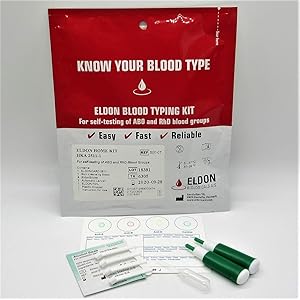
Diabetics usually have circulatory problems , which lead, among others, to swelling in the feet, legs and ankle. Of course, the swelling may be the result of sitting for many hours - which is the case with everyone who doesn't take off their chairs all day, even for a walk around the office -, but it can also be due to venous insufficiency, one of the complications of diabetes. It can also be caused by the use of medications, such as vasodilators to treat hypertension. People with diabetes are two to three times more likely to have high blood pressure.
One of the common measures is the use of compression stockings , as they relieve the “weight” of swollen legs and feet, bringing more quality of life. It works like this: it compresses the most superficial veins of the leg and also the muscles, helping the blood to be pushed back to the heart and preventing it from accumulating in the feet, which generates the swelling. But can those with diabetes wear any compression stockings? The truth is, no. Although compression stockings improve blood flow in the lower limbs, helping the return of venous blood to the heart, they are not the same. They are sold in different pressure grades. Check it out:
• Pressure between 8 and 15 mmHg - these are light compression stockings, also called supportive, preventive or prophylactic stockings; • Pressure between 15 and 20 mmHg - are those of medium compression; • Pressure between 20 and 30 mmHg - are those with firm compression; • Pressure between 30 and 40 mmHg - are those of extra firm compression. • Pressure between 40 and 50 mmHg - these are indicated for very special and severe cases, such as when a person has a clot in a leg vein.
Which to use
For diabetics who suffer from swelling in the legs and feet, the ideal is that they wear socks with medium pressure. A study published in 2017 in the journal Diabetes Research and Clinical Practice showed that in addition to not compromising the health of blood vessels, the use of socks really works for those who suffer from the problem.
But beware! Try to avoid running compression socks, which have been famous for a few years now. Their degree of compression is generally higher, because they are designed to improve performance and reduce recovery time. Although they also help to stimulate blood flow, these stockings have fibers arranged in a longitudinal and transversal direction, that is, the compression is homogeneous and not graduated, as found in the market, considered even medical and non-aesthetic products. The idea is to help control the vibration of the muscles, helping to save energy, essential for those who practice running.
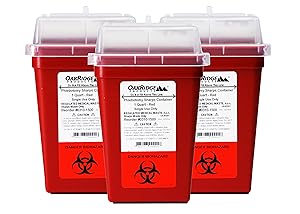
OakRidge Products 1 Quart Size (Pack of 3) Sharps Disposal Container - Approved for Home and Professional use
GREAT FOR HOME-. Ideal for diabetics. Fits perfectly on bathroom countertops. Keeps contaminated waste safe from pets and small children - Safe disposal of needles, needles with syringes, pen needles, lancets, blades (razors, scalpels, etc.
GREAT FOR BUSINESS - Designed for use by phlebotomists or others who need a small transportable container. The vertical drop maximizes useable container volume while providing a space saving option for totes, carts and work spaces.
LIGHTWEIGHT AND COMPACT - Perfect for traveling and on the go use. Fits easily into a medium sized purse backpack, gym bag, or luggage. Clear lid allows a view of the fill level, temporary closure for safety, and snap locks for final disposal.
GOLD STANDARD in Sharps Containers - this the SAME product we sell to Doctors and Hospitals all over the country. We are a US manufacturer. PRODUCT DIMENSIONS: 4"L X 4"W X 6.25" H
COMPARE FIRST - our competitor's "1 quart" products look very similar but they are actually about 20% smaller than ours. Oakridge would never mislead our customers. Our product is really a full 1 quart in size.
Disposal of Group E Waste
According to the Resolution of the Collegiate Board of Directors, of the National Health Surveillance Agency / ANVISA - RDC No. 306, of December 7, 2004, group E residues are made up of sharps such as objects and instruments containing corners, edges, points or rigid protuberances and treble capable of cutting or puncturing.
We can exemplify them: razor blades, needles, scalps, glass ampoules, drills, endodontic files, diamond tips, scalpel blades, lancets; capillary tubes; micropipettes; slides and coverslips; spatulas; and all broken glassware in the laboratory (pipettes, blood collection tubes and Petri dishes) and the like.
Sharp materials must be disposed of separately, at the place of their generation, immediately after use or need to be disposed of, in containers with rigid walls, resistant to puncture, rupture and leakage, resistant to the sterilization process, with a lid, duly identified with the international symbol of biological risk, plus the inscription "PERFUROCORTANTE" and the additional risks, chemical or radiological.
It is strictly forbidden to empty these containers for reuse. Disposable needles must be discarded together with syringes, when disposable, and it is forbidden to recap or manually remove them.
The collection containers have a capacity that varies from 3 to 13 liters, they are made of resistant material (leather cardboard), specially developed for use in health services and, preferably, have a needle disconnector.
The volume of the collection or storage containers must be compatible with the daily generation of this type of waste. These containers should only be filled to 2/3 of their capacity, or the level of filling is 5 (five) cm away from the mouth of the container. They should be located as close as possible to the area of use of these materials.
Temporary storage, internal transport and external storage of these residues can be carried out in the same containers used for Group A.
Sharps must be treated based on a previous risk assessment of the risk agents they may contain. The sharps contaminated with radionuclides must be subjected to the decay of the material that contaminated it.
CuraLin Type 2 Diabetes Supplement - Natural Ayurvedic Glucose Blood Sugar & Advanced Insulin Support for Type 2 Diabetics and Pre-Diabetics (1 Bottle - 180 Capsules - 30-60 Day Supply) by CuraLife
Are you Sick and Tired of Products for Diabetics that just Don't Work? Try Something that is much Older, Smarter, and Scientifically Shown to Effectively Maintain Healthy Blood Sugar. Try CurLin, a 100% AYURVEDIC PLANT BASED supplement for glucose & insulin support.🌱
👨⚕️ DOCTOR & PHARMACIST RECOMMENDED GLUCOSE SUPPORT SUPPLEMENT - By Diabetics for Diabetic Lifestyle Improvements. BRINGS HAPPINESS AND HOPE. NATURALLY GET YOUR LIFE BACK! 🌞 💪 🏃 💃
BENEFITS; 👍 Supports healthy blood sugar levels; 👍 Supports Glucose & Carb Absorption and Metabolism; 👍 Supports healthy insulin production; 👍 Increased Energy Levels 👍 Manages Frequent urination, Blurry vision, Neuropathy and other symptoms 💪
📢 Take 1-2 Multivitamin Capsules 30 Minutes After Each Meal 🍝 🍨
SAFE & EFFECTIVE ✅ Clinically tested ✅ Made in a GMP Compliant, FDA Registered Facility ✅
All about diabetes and travel: the disease doesn't take a vacation, but it doesn't have to disturb your
Suitcases ready, passport up to date, air ticket issued, reservations made. In addition to these basic details, people with diabetes need to take extra care when planning a trip. But it is possible to enjoy the ride peacefully knowing everything about diabetes on the road. With tips from the American Diabetes Association 1 , it's easy to check all the items you need before scheduling your vacation or business trip.
food
Regardless of the duration of the trip and the means of transport used, food for people with diabetes requires some care. Therefore, it is recommended to always bring some easy-to-eat snacks, such as fruits, cereal bars, raisins, cookies or glucose gel in case of hypoglycemia. Priority should be given to foods that do not require refrigeration and that are easy to transport.
When traveling by plane, it is advisable that the patient only applies insulin when meals are already being served. Doing this ahead of time can increase your risk of hypoglycemia. Up to two days before the flight, it is important to request from the airline the special menu for people with diabetes, low in fats, sugar and cholesterol.
Drinking plenty of water to maintain hydration is also another constant care during the journey.
Monitoring
Nowadays, the advanced technology in equipment and medicines that help to monitor blood glucose allows people with diabetes to travel much more carefree. Therefore, it is essential to always carry the glucometer, with reagent strips, lancets and extra batteries. Make sure you leave the house with all the necessary items in your luggage.
It is recommended to take a test before leaving home, especially if traveling by car and driving. In that case, it is advisable to stop and repeat the test every three or four hours or whenever hypoglycemia is suspected. Stops are also a good opportunity to stretch your legs and have a snack.
If you notice any symptoms of hypoglycaemia while driving, stop the car immediately, get tested and eat something to restore blood glucose levels. The trip should only be resumed when you are feeling better.
Medication
Before traveling, it is essential to ask the doctor for a report explaining that you have diabetes and that you will take medicines and supplies with you. A good tip is to have copies in Portuguese and in English, if it is an international trip. The doctor must also highlight in this statement the International Diabetes Code (ICD) specific to diabetes. It is a worldwide medical language about diseases and their diagnoses that will leave no doubt about your condition anywhere in the world.
Also ask the doctor for a prescription for medicines and supplies, also in Portuguese and English, and always take it with you. It may be necessary to board the plane if customs officials want to know what kind of medication you are carrying.
Medicines and supplies must always travel in hand luggage. Calculate how much medication you will need during your travel time and, to avoid any setbacks, always take a larger amount than necessary.
Wear an identification bracelet (in English and in the language of the destination), explaining that you have diabetes, with your name and an emergency phone number, especially if you are traveling alone.
Exercises and mobility
On long journeys, avoid staying in the same position for long periods. Those traveling by bus or plane should try to take a seat in the aisle, with more space to stretch their legs.
Whenever possible, take short walks on the plane or at stops, when traveling by car or bus.
Shoes should also be chosen carefully. Remember that on airplanes, especially, your feet tend to swell. Blisters can cause potentially dangerous infections for those who have diabetes. It is therefore advisable to take material for dressings and use it as soon as any signs of a bubble appear.
Timezone
Time differences can also have an impact on insulin applications. Trips to the east mean a shorter first day and this can cause less insulin to be applied. If you travel from Brazil to Europe, for example, you will "lose" a few hours, since Europe is ahead of Brazil in the time zone. Travel to the west, on the other hand, means a longer day, which may require more insulin. In this case, if you travel from Brazil to California, for example, you will earn a few hours in your day and must calculate more applications. It is essential to talk to the doctor about these adjustments and make a careful planning of medication schedules.
When arriving at the destination, one should try to make meals and give injections respecting the local time.
Health insurance
Before traveling, you need to check if your health plan is international and has coverage at the destination. Otherwise, it will be necessary to hire specific health insurance for the period of the trip, which can be done through a travel agency.
Knowing all about diabetes and travel before embarking, your vacation is sure to be more peaceful.
The Lancet for Uniqmed Lancet provides excellent performance in the collection of capillary blood.
It is compatible with the Uniqmed lancing device, being easy to use, allowing collection at home safely and comfortably .
Its tri-faceted and siliconized needle has an ultra-fine tip that generates less damage to the tissue, providing samples with minimal pain.
Available in packaging with 100 units.
What is diabetes ? Diabetes mellitus is a metabolic syndrome of multiple origin, resulting from the lack of insulin and / or its inability to exert its effects properly, which causes an increase in blood glucose (sugar).
The problem happens because the pancreas is not able to produce the hormone called “insulin” in sufficient quantity to supply the body's needs, or also because this hormone is not able to act in the proper way (insulin resistance).
Insulin then promotes the reduction of blood glucose by allowing the sugar present in the blood to penetrate into the cells, to be used as an energy source.
In summary, diabetes is the elevation of blood glucose ( hyperglycemia). So, if there is a lack of insulin, or it does not act correctly, there will be this increase and, consequently, diabetes.
How does insulin work? This hormone secreted by the pancreas acts directly to control blood glucose. When transporting glucose into cells, insulin removes sugar from the bloodstream. When insulin secretion does not occur or is reduced, the individual develops diabetes.
How to use Follow the manufacturer's instructions on the packaging or the guidance of the responsible physician.
Warnings
This product should only be used under medical advice.
Single use product.
Handle the product with care using aseptic techniques.
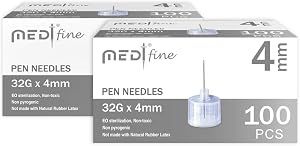
Triple sharpened ultra fine needle with thin wall technology that ensures better liquid flow
EO sterilized, Non-toxic and Non-pyrogenic
Package of 2 boxes
How to apply insulin correctly?
The Diabetes is a disease in which there is increased glucose (blood sugar). This is because the pancreas is not able to produce the hormone insulin in sufficient quantity to meet the needs of the body, or because this hormone is not able to act properly ( insulin resistance ). Insulin promotes the reduction of blood glucose by allowing the sugar that is present in the blood to penetrate into the cells to be used as an energy source. Therefore, if there is a lack of this hormone, or even if it does not act correctly, there will be an increase in blood glucose and, consequently, diabetes .
There are two main types of the disease: type 1 diabetes, in which the pancreas loses the ability to produce insulin and, consequently, it will be used in the treatment, since it is an essential hormone for the body. And type 2 diabetes, in which there is a combination of two factors - both the decrease in insulin secretion and a defect in its action (insulin resistance). Generally, type 2 diabetes can be treated with oral or injectable medications, however, over time, the disease may worsen. In this case, it will also be necessary to use this hormone, isolated or associated with medications. There is also diabetes that occurs during pregnancy (gestational diabetes) that may need treatment, including insulin, depending on each pregnant woman. This type of diabetes tends to disappear after pregnancy.
When the doctor deems it necessary to use insulin therapy, it is important that patients are advised on the type of insulin to be used (there are several types on the market), as well as on the care in its application. In recent years, there has been a breakthrough in the insulin treatment of diabetic patients. Despite these advances, some basic information for its application is still unknown to many people with diabetes, such as: ideal type of needle, location and rotation of the application sites, care at the time of insulin application, among others.
Basic guidelines for insulin application
Insulin should be applied directly to the subcutaneous tissue (layer of fat cells), just below the skin. The thickness of the skin is around 1.9 to 2.4 millimeters (mm) at the places of insulin application. As the idea is to pass it, without, however, reaching the muscles, the needles used can be 4, 5, 6 or, at most, 8 mm.
The application angle varies depending on the amount of fat in the application area. For example, in the case of a thin person with little fat in the application area, there is a greater risk of reaching the muscles when using a longer needle and application angle of 90 ° in relation to the skin surface. In these cases, it is possible to choose a shorter needle, make a skin fold (of skin) and apply at a 45 ° angle.
The skin fold is used to prevent the needle from reaching the muscles located just below the adipose tissue (layer of fat cells). This is because in the muscle insulin can be absorbed more quickly, causing hypoglycemia (marked reduction in blood sugar). It is preferable, when available, to use shorter and thinner needles. The choice of needles can follow the following recommendations:
For adults Needles with 4, 5 or 6 mm can be used by obese and non-obese adults. In the case of 4 and 5 mm needles, it is not necessary to make the skin fold and the application angle is 90º When needles and syringes with a 6 mm needle length are used, applications should be made at a 90º angle. However, when the application is carried out in a region with scarcity of fat (subcutaneous tissue), the skin fold and the 45º angle should be performed to avoid an intramuscular injection. There is no medical reason to use needles longer than 8 mm.
For children and children and teenagers Needles with 4, 5 or 6 mm can be used. There is no medical reason to use longer needles For children under 6 years of age, it is recommended to make the skin fold with all needle lengths (4,5,6,8 mm) and angles of 90º Children and adolescents need to make the skin fold and 45º angle with needles of 6 mm or more.
For pregnant women The abdomen is a safe region for insulin delivery during pregnancy Due to the thickness of the skin due to uterine expansion, pregnant women should use 4 or 5 mm needles When needles of 6 mm in length or more are available, the application should be carried out with the skin fold and at an angle of 45º It is prudent to perform the skin fold at all application sites From the second trimester of pregnancy, it is recommended to use the sides of the abdomen, thigh, back of the arms and buttocks.
What are the best places to apply insulin?
Abdomen (belly)
Thigh (front and outer side)
Arm (back of upper third)
Buttocks (upper and lateral part of the buttocks).
Do I need to rotate between the application sites? Yes, it is important to mention that there must be a rotation between the application sites, as this approach reduces the risk of complications in the application area, such as lipohypertrophy (hardened points under the skin) or lipoatrophy (depressions in the skin relief caused by fat loss).
The application sites, as well as the illustration of the correct way to make the skin fold can be viewed directly on the website of the Brazilian Diabetes Society ( http://www.diabetes.org.br ) or in the articles cited in the references. The ideal is to wait 20 to 30 days to reapply at the same point. The distance between two points of application should be about three centimeters (two fingers). In the abdomen, insulins can be absorbed more quickly than in the arms and thighs.
Step-by-step when insulin is applied:
First, separate all of the material: prescribed insulins, syringe, needle, cotton and alcohol.
Wash your hands thoroughly with soap and water. Then clean the application sites with cotton wool soaked in alcohol. The ideal is to use a new syringe and needle for each application. All these precautions contribute to avoid contamination and infection at the application site.
NPH insulins and premixtures should be mixed gently, rolling the bottle between your hands approximately 20 times, without shaking the bottle, until the liquid is milky and homogeneous. This procedure is not necessary for transparent insulins.
Clean the rubber stopper on the top of the bottles with a one-way alcohol swab.
Aspirate an amount of air into the syringe equal to that prescribed keeping the needle covered with its plastic cap.
Remove the needle cap and place the vial on a flat surface. Insert the needle through the rubber stopper of the insulin vial and inject the air inside the syringe into the vial.
Turn the vial upside down and draw in the prescribed amount of insulin. If there are bubbles in the syringe, inject the insulin back into the vial and repeat the procedure.
Remove the needle from the vial.
Clean the chosen area by wiping the alcohol-soaked cotton over the skin in one direction only. After passing the alcohol, do not apply the insulin until the skin is completely dry.
With the syringe between your fingers, as if it were a pen, you must make a quick movement towards the skin (throwing a dart) at an angle of 90º or 45º as directed. Make the skin fold when necessary. Insulin injection should be done slowly. Applying insulin at room temperature helps to reduce pain during application. The ideal is to remove the insulin vial from the refrigerator 15 minutes before application.
Remove the needle from the skin and press the spot gently with a dry cotton pad. Massage should not be done on the application area, as this can increase blood flow and alter the absorption of insulin. Immediately cover the needle with the cap to prevent contamination from accidents.
The use of the pens must be carried out according to the instructions of the manufacturer of each one of them. Its use should be restricted to only one patient. Needles should be immediately disconnected from the pen and discarded after application and used only once to avoid contamination and infection. After insulin is applied, count to 10 (ten seconds) to remove the needle. When larger doses are applied, it may be necessary to count up to 20 seconds to prevent part of the insulin from returning to the skin surface when the needle is removed. This count is not necessary for syringe application.
Regular insulin should preferably be applied to the abdomen to increase the absorption rate, while NPH should be applied, preferably, to the thighs or buttocks, to delay absorption and reduce the risk of hypoglycemia. The appearance of ecmoses (purple spots) is common at the site of insulin application. They are due to blood leakage when blood vessels are punctured by the needle.
These guidelines are important, however, not sufficient for all patients, depending on the peculiarities of each case. If your question has not been clarified here enough, ask your endocrinologist. The education of patients with diabetes is of fundamental importance in order to achieve good glycemic control. Thus, it is important that education be continued, with periodic reviews, as the inadequate application of insulin can cause hyper or hypoglycemia (increase and decrease in blood glucose), that is, result in poor disease control and, consequently, in increasing the risk of complications.
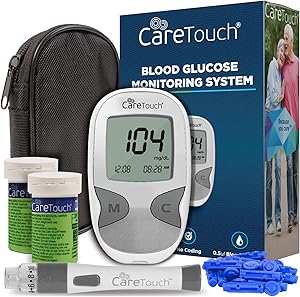
Care Touch Diabetes Testing Kit – Care Touch Blood Glucose Meter, 100 Blood Test Strips, 1 Lancing Device, 30 gauge Lancets-100 count and Carrying Case
FAST RESULTS – Get results in as little as 5 seconds.
NO CODING – Our monitors recognize batch codes encrypted on each test strip, so there is no need for you to manually insert any code with each new batch.
HYGIENIC STRIP EJECTION – Our state-of-the-art monitoring system includes a single touch strip ejection, so you no longer have to worry about manually removing the soiled strip.
MEMORY – Keep a survey of your health using the memory storage capable of saving up to 300 readings, while also keeping a continuous 14-day average.
Care Touch Diabetes Testing Kit – Care Touch Blood Glucose Meter, 100 Blood Test Strips, 1 Lancing Device, 30 gauge Lancets-100 count and Carrying Case
Glucose monitors for diabetics gain healthy supporters
By real-time monitoring, people without the disease are increasingly using the device
Indicated for patients with diabetes, the continuous glucose monitor (MCG) is being used by a small but growing group of people without the disease who want to know more about their own body. The MCG is attached to the person's body, and is a device composed of a needle, which makes a small hole in the individual's skin, and a sensor that tracks changes in blood sugar level in real time, and is generally used after indication. doctor. Since the first monitor approved in 2005 (in the U.S.), some people with diabetes have been using the devices to help monitor blood sugar, rather than having a finger prick throughout the day to check manually. MCGs take a periodic measurement, and people can set 'alarms' to alert them whenever their levels are dangerously high or low. In Brazil, the first device arrived only in 2016.
Tabb Firchau is a businessman who lives in Seattle (USA) and has been using the monitor for more than a month. The data is then sent directly to Tabb's smartphone. The businessman bought his MCG over the internet for approximately $ 300. Here in Brazil, an MCG starter kit is available for 599 reais (device + 2 sensors), and each sensor - which lasts 14 days - costs 239 reais, a cost that can reach at least 6,300 reais in the first year (including purchase of the device).
“I follow almost everything, from sleep to exercise,” says Tabb to the Time magazine report. “I have been trying to find out why some days I feel fantastic, and some days I don't. I ate a cinnamon dessert recently and my blood glucose doubled in an hour. The monitor helps you understand the costs of the decisions you are making, ”says Firchau to the report.
Tabb, however, was unable to get the device on the recommendation of his doctor, because he does not have diabetes. A healthy person using a diabetes device may seem awkward. However, individuals like Firchau say it makes sense to control their blood sugar, especially given the recent attention to the risks of the onset of chronic diseases associated with excessive consumption of processed sugars and carbohydrates, which can range from diabetes and heart disease to obesity.
Blood sugar levels change throughout the day for everyone, and especially after eating. These fluctuations, however, are important to accompany people with diabetes, since for this group the body does not regulate blood sugar on its own. For those without diabetes, however, the pancreas naturally releases insulin to maintain levels within a normal range.
Learning about nutrition "I think it is fun and interesting for a diabetes tool to take that path," says Aaron Kowalski, a type 1 diabetes patient and head of mission for JDRF Diabetes - a nonprofit fund that aims to fund research on diabetes 1. "But I guarantee that if you used one at McDonald's your blood sugar would rise and you would learn a lot about nutrition, ”adds Kowalski. Using an MCG, even when it is medically necessary, is not cheap. Parts of the device have to be replaced every two weeks - or months - and MCGs are estimated to cost $ 5 to $ 10 a day - about $ 3,000 a year. In the US to buy from a physical store, people without the disease must convince a doctor to prescribe the device. Or simply buy it online, without a prescription.
Experts don't think it's dangerous Five diabetes experts interviewed by Time do not think the use of MCG is dangerous. Although the device is connected to the user's body, it is considered a minimally invasive device. "I don't think there is any risk," says Boris Kovatchev, director of the Center for Diabetes Technology at the University of Virginia (UVA). "Unless people are very obsessed [overly concerned with swings]," adds Kovatchev. Even some doctors who do not have diabetes use MCG. Dr. Steven Russell, a diabetes specialist at Massachusetts General Hospital in Boston, and his research collaborator Dr. Ed Damiano of Boston University, say they use MCG sometimes for demonstration purposes and to test new versions.
"I am fascinated to see how my blood glucose changes after different meals," says Dr. Russell. “You look at a candy and remember what it did to your blood glucose, and you end up making a different choice. There is no reason why people without diabetes would not be interested in this ”, adds the researcher.
However, experts admit that there is no research that proves that using an MCG can improve the health of a person without diabetes. So far, all the evidence is superficial. While it is unlikely that the devices would cause major problems, in addition to possible skin rashes or infections at the injection site, this has also not been studied in people without diabetes. Dr. Kovatchev, from UVA, also argues that MCGs could be more useful for people without diabetes with some adjustments. "There is a need for some analysis that could process the data properly and provide information to people versus a flow of data," he says.
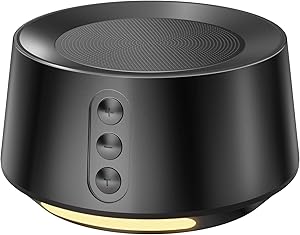
Letsfit White Noise Machine with Adjustable Baby Night Light for Sleeping, 14 High Fidelity Sleep Machine Soundtracks, Timer and Memory Feature, Sound Machine for Baby, Adults, Home and Office
14 Soothing Sleep Soundtracks: Letsfit white noise machine has 3 white noise, 3 lullabies, 3 fan sound effect and 5 relaxing natural sounds. A sleep sound rhythm that helps you drift off to sleep.
Soothes Fussy Infants: Our calming nature sounds are perfect for your baby's sleep routine to help them fall asleep faster and sleep longer. A Sleeping baby means more sleep for the whole family.
Great For Privacy and Concentration: Our sound machine can cover up conversations making it perfect for office privacy. It can also be used as a low-cost way of blocking out environmental noises and distractions.
Adjustable Night-light: A function perfect for new mothers, this night-light emits just enough light for night nuseries or for use when changing diapers without being too bright causing disturbances.
Timer and Memory Function: Play our white noise machine at 15, 30, 60, 90 and 120 min intervals with auto-off timer settings. Our sleep machine can remember the last sound and volume when restarted, meaning there's no need to worry about re-setting.
Sound therapy, the relaxing power of sound vibrations
Sound therapy is a sound-based therapeutic technique that allows you to achieve a state of deep relaxation. The sounds and vibrations of a gong, singing bowls, tuning fork or even the voice provide true physical and mental well-being.
The therapy sound uses sound waves to the benefit of well-being. An age-old discipline that is returning to the foreground, sound therapy is increasingly used in yoga and meditation sessions . Practiced in a group or individual session, it allows you to feel the way the sounds and vibrations act in our body.
The benefits of sound therapy Composed of 70 to 80% water, our body is very receptive to vibrations and sound waves, which have many positive effects on physical and mental well-being. The vibrating frequencies act on the cells of our organism, the liquids, the meridians and the energy channels.
Here are the benefits we can see:
Sound therapy reduces stress and anxiety by acting on the central nervous system.
Helps to dissolve blockages and release tension.
In addition, it improves cognitive skills: memory, concentration, creativity, language.
Promotes quality sleep.
Relieves physical and emotional pain.
It rebalances the body's energy.
This sound treatment has existed for centuries and is not only widespread in the East (Tibet, Nepal), but also in Antiquity, where singing was used to calm pain or for healing purposes. Some yoga practices also incorporate the repetition of Mantras , formulas composed of syllables whose sounds have, among other things, the power to heal .
Harmonic singing, music and its vibrations have always been used for therapeutic purposes to relieve pain. Several studies have demonstrated the relaxing power of music, as well as its role in reducing chronic pain in patients.
In many places in the world, sound therapy is used as support and comfort in care, in addition to drug treatments within its palliative care service. Today, this sound care discipline can be found under different names: onotherapy, sound bath, sound therapy, sound yoga, sound massage or Touching by Sounds ® (by Emmanuel Comte). It is based on sonology , the knowledge of sounds for therapeutic purposes.
Sound bath or sound treatment, how does it work? As soon as you hit an instrument like a Tibetan or crystal bowl with a stick, the sound emits vibrations that spread throughout your body ; like the vibration of a ricochet in the water. The organism emits an electromagnetic field: the surface of the body, like the skin, but also the interior of the body (organs, meridians, muscular structure, bone, nervous system) vibrate in the depths of our cells. When there are physical tensions, emotional blocks, illnesses, the frequency of these vibrations is disturbed.
Thanks to their specific frequencies, the sounds that emanate from the instruments can resonate with our body to rebalance its internal structures, its energy, as well as harmonize the body and mind. It is water, the main constituent, that acts as a conductor. The vibrations can thus diffuse through the cells.
Certain waves emanating from Tibetan bowls or crystal bowls are also noticeable by the brain in a relaxed state, we speak of alpha waves . In active standby, our brain emits mainly beta waves, fast waves. Alpha waves can only be achieved through meditation and allow the two hemispheres of the brain to function in harmony with many benefits for the mind: global view of things, better concentration, better memory, better management of stress and emotions, listening to our intuition .
During a session or treatment, you can use different instruments:
The gong: It is a metallic percussion instrument, with a more or less flat and circular surface. The larger ones make a very loud sound and are usually hung vertically. There are also bowl-shaped gongs.
The tuning fork: it is similar to acupuncture by means of sound. The tuning fork produces ultrasounds and vibrations that penetrate the body, muscles, organs and joints to relax them and also to stimulate their own regeneration.
Tibetan bowls : made of different metals and of all sizes, they appear after the gongs. Some can be used as a bowl for relaxation or meditation, others for sound massages. In this case, it is placed on the body of a person lying down and beaten so that the sound penetrates into the body.
The crystal bowl: White, colored, transparent or matte, offers a long song, made of high vibrating frequencies.
Tibetan dishes: they collide to spread a clear sound and prolonged resonance. Your touch invites meditation. They are used in yoga to start or end a session. During the sound baths, they create a universe of sound conducive to relaxation and meditation. They also make it possible to purify a room from negative energies.
How is a sound therapy session? On the sheet and under the blankets, practitioners are resting in the gloom. For once, they have nothing to do, they just let themselves be guided by the therapist and packaged by the different instruments.
The bells open the ball, the singing bowls take over. Silence punctuates the session to give everyone time to assimilate all these vibrations, those that we hear and those that we do not perceive, but that the body feels.
So, it is the powerful sound of the sledgehammer hitting the gong that it plays. There are about fifteen gongs that resonate as the session progresses, while the tones of the Tibetan bowls and tuning forks, more acute, complete this cosmic concert.
Do not expect a beautiful melody, the western musical ear must allow time to appropriate this new symphony. But you reach a state of deep relaxation. Some enter a meditative state in which their breathing becomes more regular, while others fall asleep in a gong bath, also called a gong bath .