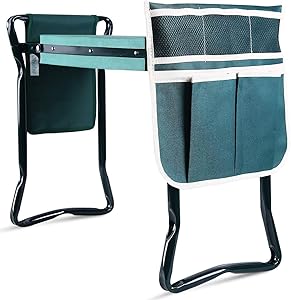
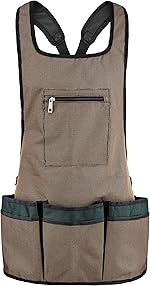
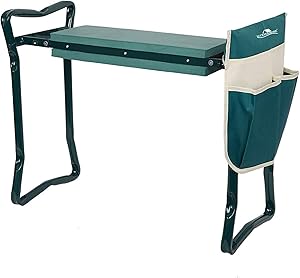
- Multipurpose Design: Can be used as a seat when its standing upright or use it as a kneeler when flipped over.
- Foldble Design: The garden kneeler folds up easily and compactly,easy to carry and storage;Folded Dimensions: 22.5”(L) x 10.6”(W) x 5”(H).Weight: 5.7 lbs
- Convenient Tool Bag: Comes with a removable tool pouch with pocket. It is perfect for keeping your tools for your convenience.
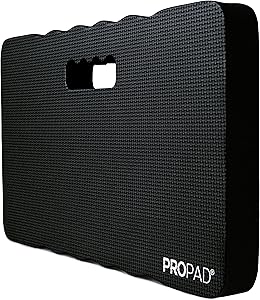
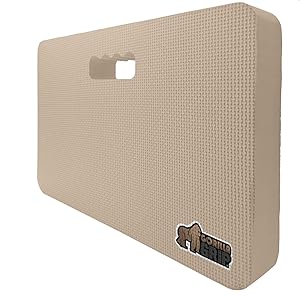
- Comfortable Design: This garden kneeler comes with a soft EVA foam padding make you more comfortable after a long time stopping and avoid possible injuries.
- Sturdy Design: Constructed with a solid steel frame will provide support for your arms when kneeling down and getting up.

Gardening and arthritis
Introduction
Gardening is one of America's most popular hobbies. In addition to the joy it brings, gardening is a great activity for maintaining range of motion, bone density, strength, flexibility, and overall quality of life for people. It has also been shown to relieve stress, anxiety, and depression. Going out to enjoy the sun and fresh air can improve your mood, giving you a chance to relax and get away from everyday problems.
Many people with pain or limitations due to arthritis may think they will have to give up this popular hobby. However, with a little knowledge, the right tools, and an open mind, you will be able to actively garden while reaping its benefits.
Contents
Here we explain how arthritis can affect your ability to garden, and what can be done to minimize its effects when gardening. After a summary of the disease, its incidence and symptoms, attention will be directed to ways to overcome the limitations that arthritis can impose on the gardener, including:
- Garden planning and related activities.
- Selection of tools to reduce pain and stress.
- Prepare the body for gardening.
- Manage the discomfort of arthritis while gardening.
On a larger scale, gardening can be an important source of food for family and friends, an income generator, and even a trade. With the growing popularity of spaces like farm markets, flower and vegetable production could be a viable option for someone. Therefore, the information we provide will also be useful for those involved in large-scale gardening or small-scale agricultural initiatives. It also provides additional sources of information on a variety of gardening topics.
WHAT IS ARTHRITIS AND HOW DOES IT AFFECT ME?
The term "arthritis" is used to indicate inflammation of the joints and surrounding tissue. It refers to more than a hundred diseases that are characterized by problems of the joints and the tissues that surround them. Arthritis is the number one cause of disability in the country, affecting nearly 50 million people. It can impact life in the workplace and in everyday tasks, including hobbies and gardening.
Various risk factors are involved in the development of arthritis. Some are inherent, such as age, gender, and heredity. Others, such as obesity, certain types of sports activities, and occupational hazards can be modified to help prevent or manage the disease. Therefore, an accurate diagnosis is important. It is recommended that you see a doctor if you have any of the following symptoms that appear to be related to the joints: persistent pain, stiffness, swelling, redness / warmth, difficulty flexing the joints, fatigue, weight loss, or nausea.
Gardening has many physical and mental benefits. But movements like bending, kneeling, pulling, lifting, and carrying can lead to stress and joint pain in those with arthritis. Before starting any strenuous task, check with your doctor to make sure you are physically fit for it.
HOW CAN I PRE-PLAN MY GARDEN?
While some gardeners dream of acres of vegetables, fruits, or flowers, this may not be possible or practical if you have arthritis or other physical limitations. Therefore, it is a good idea to determine your needs and desires in advance, and identify your capabilities and limitations. Among the things to consider are the type of garden, size and location; plants to be sown; and, based on those decisions, the necessary tools and accessories. The right time to plan your garden is during winter, when you have time to assess your wants and needs. Start by searching online flower and vegetable seed catalogs to determine what you would like to plant. You may soon discover that even a small plan can be stretched out into too much work. Winter is also a great time to seek out gardening classes. Most local Extension offices (see NOTE at end) will have information on gardening resources and programs, as well as volunteer training courses.
Garden type
Although traditional gardening generally relies on planting in a plot at ground level, other types of gardening may be more beneficial for individuals with arthritis. These include raised beds and gardens, flower pots, hanging baskets, and vertical gardens with towers or lattices. Growing plants in these alternate soils can reduce bending, reaching, or kneeling, which helps reduce stress on the back, knees, shoulders, and arms. They typically require less maintenance, require less watering, and weeding when mulched, making harvesting easier. Likewise, they are not subject to so much soil compression, since in most of the raised terraces there is no walking, which means better drainage and aeration.
Raised decks are typically dirt-filled wooden, partition or concrete frames placed directly on the ground or other hard surface such as a patio or rooftop. Such terraces can raise the level of the garden from a few centimeters to several meters above ground level, depending on the desire of the gardener. Straw bales or wooden pallets can also be used to build a raised growing medium.
Raised gardens are generally large wooden or plastic boxes on supports to raise the surface of the garden to table level or to one of appropriate height for the user. These are especially helpful for those who use treadmills, wheelchairs, or scooters, or who must sit or stand while working in their garden.
Container gardens can consist of flowerpots, boxes, barrels, or other receptacles filled with growing medium. However, it is important to only use containers that have never held toxic substances. Potted gardens can be placed at various heights or hung from a wall, and are particularly useful in small spaces such as patios or balconies.
The towers and lattices can be found on the ground or in pots. They can be made from common materials such as PVC pipes or bamboo poles or purchased commercially. Vertical gardens can also be used in conjunction with containers for such a purpose as hydroponic cultivation (planting plants in water or other solution, dispensing with soil).
Garden size
Whether you garden as a hobby or a source of income, planning the size and scope of your garden is critical. Investing time in studying the growth needs of each type of plant, space and quantity to be harvested will serve to balance the physical tasks required to grow those plants. In the case of orchards, it is important to determine if the harvest will be destined for personal consumption only or for the family, or for agricultural markets or outdoor stalls. A tomato plant will produce several kilos of tomatoes, while corn typically produces one corn per year. If you grow melons, squash or sweet potatoes, it will require more space to accommodate its long branches or vines and large fruit. If you use pots or raised beds, there will be more variations and uses of the available space than if you till and plant an orchard in the ground. However, the size of the garden will be determined by the dimensions of the bed or pot and will limit the number of plants that can proliferate.
Another point to consider is the width and length of the rows in a garden. Each row should be wide enough to be able to walk, load baskets, and operate cultivation tools, such as a plow. Wider swaths can also be fertilized to aid weeding. Longer rows will require you to walk more, which can be difficult for some people, especially when carrying heavy containers. If the rows are very long, consider putting a straw bucket or bale midway to rest.
As mentioned above, if you are a beginning gardener, start small and extend your garden as you gain experience and determine which plants you enjoy the most and provide the most benefit to you.
Garden location
Another important planning decision is where the garden (especially a traditional one) should be located in relation to natural drainage, sun exposure, cellar, water source, and perhaps a processing station (eg for washing vegetables). Locating the garden near the water and silo will reduce the time and energy spent carrying tools, carrying watering cans, pulling hoses, and handling the crop. If you have to be at a considerable distance from the aquifer, consider a local irrigation system. Some examples are spray hoses, drip hoses, and anti-frost hydrants installed next to the garden. If walking is difficult, use an electric tricycle.
In and around the garden itself, design paths that are wide enough to circulate with tools, equipment, and accessories. The sidewalks must be level and regularly maintained because walking on uneven and rocky paths is difficult on feet, robins and knees. Uneven terrain also increases the risk of trips and falls. Some gardeners use small gravel or mulch to create easy access paths. Paths can be made of coarse materials such as tree bark, compost, or decorative stones. Ideally, a sidewalk should be 18-24 inches wide or, if necessary, wide enough to accommodate a wheelchair or treadmill. Avoid sharp corners and steep slopes to reduce stress on the knee and hip joints.
Which plants will it be advisable to plant?
Whether you are planting fruit trees or vegetables for consumption or flowers for their beauty, it is important to decide what to plant depending on the amount and type of work you are physically capable of. Selecting low-maintenance plants can often make gardening more enjoyable. Certain types of plants require a lot of attention, while others require minimal care until harvest time.
Herbs like basil, oregano, dill, spearmint, and coriander can easily grow in pots. Some are perennial or lively so they spread easily year after year. Radish is a quick, small crop that is easily planted and harvested. Leafy greens like lettuce, kale, and spinach are cool-weather crops that are planted and picked multiple times at the beginning and end of the season. However, some of these crops require a traditional environment to harvest, which involves kneeling or bending over. Consider planting these plants in pots, raised beds, or even hanging baskets.
Vegetables like tomatoes, chili peppers and cucumbers can be stacked to raise the level of the crop to a comfortable height. Sowing peas and beans in lattices simplifies their collection compared to the soil. In addition to reducing the need to kneel or stoop, raising crops can reduce disease and make pest control easier.
Perennials are a good alternative for a low-maintenance garden because they only need to be planted once. The selection of flowers will also depend on the growing environment, some options are hosta, echinacea, peony and iris. Gardeners should be careful not to include high-maintenance perennials that require a lot of pruning, shaping, or collecting debris. For those interested in fruits, there are many dwarf fruit trees that are ideal for small gardens. They can be kept pruned to less than 5 feet and be productive. With proper care, they can bear fruit for many years without the need to mount ladders.
WHAT KIND OF TOOLS AND ACCESSORIES CAN HELP ME?
For gardeners with arthritis, it is essential to work as safely as possible, minimizing the physical impact on the back, knees, shoulders, arms, wrists and hands. There are ergonomic garden tools created to keep the body in natural, neutral and comfortable positions. The word "ergonomic" simply means that it is designed to minimize physical strain and discomfort while maximizing efficiency. These tools must be carefully selected to meet the physical limitations and skills of the user.
Tools must be tailored to the individual. Consider characteristics such as the weight, shape and size of the grip, the length, and the gripping surface of the tool. Choose the lightest but strong enough to get the job done. Although a wider handle may be more comfortable, it could tire you out sooner; thumb and forefinger should touch when grasping. (Take into account the different sizes of hands). A tool with a curved grip may cause less wrist flexion during yard work. The handle should have a textured, non-slip surface that avoids having to grip too hard or should be covered in a soft, malleable material that provides cushioning to facilitate a firm, comfortable grip with minimal slippage.
Small Hand Tools
The best hand tools have grips designed to keep your wrists straight, which is a more neutral position, for gardening tasks. This allows for greater grip strength, reducing stress on the joints of the hands. Some hand tools have forearm clamps that allow you to work harder, reducing stress on your wrists. Others have sprung handles, pivots and adjustable ball joints for pruning, making them easier to grip and requiring less effort from the shoulders and hands.
A properly sized handle can decrease hand fatigue and does not have to be tightly squeezed. Consider modifying the tools you already have. Talk to other gardeners to determine which tools are most appropriate for people with arthritis.
Long stick tools
Long pole or telescopic tools allow the gardener to work standing up or sitting down without having to stretch, bend or kneel, thus reducing stress on the back, hips, shoulders and arms. They also leverage and can be used with a double grip, which tends to distribute the load to the larger muscles. Adding an extra handle or forearm clamp to a long stick tool makes shoulder and elbow work easier.
Seats or kneelers
Finding a space to sit and rest while gardening can relieve stress on your lower back, hips, and knees. A seat can be as simple as a bucket down. Several types of tool carts are suitable for sitting. Larger wheelbarrows are less likely to get stuck in loose dirt, preventing excessive pulling. You should avoid working directly on the floor if possible, but if you can't, use knee pads or cushioned recliners to support your knees and hips. Some kneelers are equipped with armrests that help to get up and serve as a seat when turning.
Specialized tools
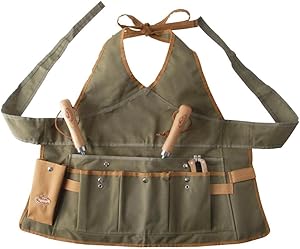
There are many types of specialized tools and equipment that are being developed to make gardening easier for all types of people. For example, there are sowing tools with interchangeable plates to directly spread seeds, even very small ones like carrot and lettuce. Drills or electric drills for planting flower bulbs reduce the need to dig holes by hand. To reduce the stress of lifting heavy (and sometimes bulky) containers, sacks can be hung over the shoulder for harvesting or use wheeled containers. There are many kinds of special tools and they should be considered in the initial decision-making stages.
Manufacturers have developed a line of tools that are designed especially for women. Tools are generally lighter and are equipped with smaller diameter handles. Some have multiple applications, particularly for individuals with arthritis.
Electric plows make working the land much easier than by hand. Some of these can help prepare raised rows or beds. However, they can also expose the user to excessive vibration and stress on the elbow and shoulder joints, primarily on hard or rocky terrain. A rear-mounted plow is generally simpler to operate. If you use an electric plow, take frequent breaks and wear anti-vibration or padded gloves, as well as shock-absorbing shoes with good traction. When working with packed soil, it is best to work in short, narrow segments to reduce vibration or stress on the joints.
HOW SHOULD I PREPARE FOR GARDENING ?
Once the pertinent decisions have been made, there are still some things that deserve consideration before starting the work. Key decisions are:
- appropriate weather conditions and the best time of day to do them,
- clothing that provides comfort and protection,
- preparatory exercises prior to gardening.
- Weather conditions / time of day
Sometimes the weather can hamper the pleasure of being outside gardening. High temperatures and exposure to intense sun, even for a short time, can result in serious health risks, particularly in individuals who take certain types of drugs. Check the labels for sun exposure. If you will be working in the heat, plan to drink plenty of water (avoid sugary or caffeinated drinks), and rest often in the shade.
Eat healthy to conserve energy. Consider gardening in the early morning or late afternoon, when the sun's rays are less intense and it is generally cooler.
To help you maintain a good work rate, schedule gardening activities at a time of day when you feel best and when the weather is most pleasant. However, whatever time you choose, listen to your body. Promise yourself that if what you do starts to strain your joints, you will stop and rest BEFORE they start to hurt. If the task becomes too heavy to finish alone, ask for help. Normally, family and friends will be ready to assist you if it reduces the pain. It also offers you the opportunity to share the fruits of the earth.
Gardeners operating a fruit or vegetable stand or farmers with a local market may find it more difficult to control a schedule that allows them to make a profit. Adverse weather and long work hours could significantly affect joint stress and pain. Prepare yourself with enough fluids to stay hydrated, an awning or shed that provides enough shade, a chair or bench, and appropriate attire.
Clothing
Protect yourself from the sun by wearing a hat and applying sunscreen (SPF 30 or higher) to bare skin, reapplying every two hours. Put on gloves, which not only offer skin protection, but help reduce stress on the hands for lifting, carrying, and grasping. Appropriate gloves will have an extra padded and slip resistant surface.
When selecting clothing for this activity, be aware that pants and long sleeves that protect you from injury can make you hot, so choose light clothing. Some pants have padding or reinforcing patches on the knees. Footwear is also very important: wear closed shoes with good soles that provide traction and grip, or boots that offer support to the ankles. Other protective items are insect repellants; Polarized sunglasses, both to protect from the sun's rays and to protect the eyes from external objects and hearing protection if you work with very noisy power tools.
Preparatory exercises
It is usually a good idea to do warm-up and cool-down exercises as well as stretching at the beginning and end of gardening. Stretching lubricates the joints reducing inflammation and protects them while you work. Stretch all the large muscles that you are likely to use during activity, especially your legs, back, and shoulders. Exercise slowly and only a few repetitions. The following figures show some stretches that will help you increase joint strength and flexibility. They can be performed standing or sitting, depending on your mobility. Ask your medical staff to suggest the most appropriate exercises for you.
THE ARTHRITIS FOUNDATION RECOMMENDS AT LEAST 4 REPETITIONS OF EACH EXERCISE
- Torso rotation
- Cross your arms or place them on your hips.
- Rotate your torso (at the waist) to look over your shoulder.
- Repeat in the opposite direction.
Fingers
- Touch your thumb with your index finger to form an "O".
- Open your hand fully after each "O".
- Repeat with each finger.
Arm circle
- Put your hands on the men with your elbows out.
- Make circles with your elbows varying their size and direction.
- - Increase the intensity by extending your arms to the sides at shoulder level.
Hips march
Sit upright in a chair and "march" to the edge of the chair by lifting one hip and moving it forward, then with the other hip.
"March" back by alternating lifting one hip while leaving the other on the chair.
Ankle Circles
Sit or stand supported by a chair.
Raising one foot, slowly draw large circles.
Repeat with the other foot.
HOW CAN I LOWER THE DISEASE OF ARTHRITIS WHILE I WORK IN THE GARDEN?
Pain management is something gardeners with arthritis need to understand. When you exert your muscles in gardening or exercise, the blood flowing to them rises while oxygen drops, which can lead to muscle pain. Joint discomfort can occur from overuse of a joint or other inflammation in the body. You also have to remember that some muscle pain can be delayed so that it doesn't hurt until the activity is over. In this case, be prepared to give your body a good rest before going back to work. Either way, it's critical to be aware of what your body is telling you. Some key points to reduce pain and swelling are:
- maintain good posture,
- pushing, lifting, carrying and digging correctly,
- alternate gardening chores and take breaks when needed.
Proper posture
Keeping your back straight as much as possible, particularly when lifting, can decrease stress on ligaments, tendons, and joints, which reduces the likelihood of injury. Proper posture can also reduce muscle pain and fatigue. If you hunch, straighten up and return to an upright posture. Don't twist or rotate your lower back when moving or gardening. Turning the lower back, specifically when doing so while bending it, is the leading cause of spinal cord damage. Minimize the time you hold the same posture by frequently changing the position in which you stand or sit. If you are sitting or kneeling, bend your hips forward to help keep your spine straight. Eventually all of these habits will become second nature.
Try to avoid kneeling as much as possible. However, if you must, use only one knee. Getting on your knees with both can cause your back to stretch, causing more pain. Avoid bending over to ground level without using some form of support such as a shovel. A cushioned kneeler with supports on both sides for support will help you lean back and slowly rise up when you're done, as well as cushioning your knees.
Push, lift, carry and dig
Correct body mechanics includes having the strongest parts do most of the work. When lifting or pushing heavy objects use your hips, thighs, and knees instead of your lower back. This is accomplished by bending the knees while keeping the spine straight, thus using the leg muscles to lift the object. When lifting or carrying something, bring your arms and the object as close to your body as possible to protect your back and shoulders. When digging with a shovel, first pick up the dirt and then turn your entire body before tossing it to the side. Avoid twisting your body and do not try to add dirt or compost that is wet, very heavy, or sticky.
Alternating tasks and taking breaks
Consider rotating tasks every 20 minutes or more, as appropriate. This helps ensure the use of different body parts and muscle groups. Varying your garden activities reduces repetitive stress on your spine, joints, and muscles.
Take regular breaks so you can stretch, drink water, and evaluate what you want to do next. Come to a complete stop if you feel fatigued. Many injuries occur when the person is trying to do "the last thing." If you notice stiffness, pain, or swelling, apply ice to the sensitive area for 15 - 20 minutes. Ice can lower inflammation and pain. Some gentle stretches in that area may be helpful. If the pain persists or worsens, stop working and call your doctor. Medications and therapies are options for pain management.
SMALL-SCALE PRODUCTION OF FRUITS AND VEGETABLES
Gardening itself is often very satisfying and generates enough harvest for the family and friends of the individual who practices it. But a personal garden can grow in size and productivity to the point where it becomes a small-scale business.
We often see gardeners selling their bountiful fruits and vegetables at outdoor stalls or farmers' markets. A small orchard of fruit trees can begin to proliferate so much that the producer begins to supply a local store or restaurant. When the hobby of gardening takes this step towards small-scale production, the physical and mental demands of the gardener multiply as well.
In addition to increasing the number of hours of work and the physical tasks related to sowing, planting, cultivating and harvesting, the gardener can increase the level of stress or excessive use of the joints. Many of the suggestions mentioned here can still be applied at this level of production, but some of the tools used will be inappropriate.
Before expanding your growing operations, check with those who have been successful. Or inquire at Local Extension (links under Additional Information). Carefully assess what an operation of this size entails both economically, physically and environmentally. For example, if you are putting up a greenhouse, weigh the cost of adjustable tables and rods for hanging pots versus the effort of continually bending or reaching for plants. Using a cart with wheels and automatic irrigation systems in greenhouses can also reduce the workload. Expand your operations at a pace that allows you to adjust to new demands.
NOTE
In this country, many universities receive government funding to teach agriculture (under the auspices of the United States Department of Agriculture or USDA), which are called “land-grant universities” (LGU). Each state has an LGU that operates a service called a cooperative extension service (CES). There are CESs in every county in every state, which is in charge of the gardening program, which is known by the name “Master Gardener,” among others. Anyone can participate, but to become a Certified Master Gardener a special accredited course must be completed. You can also take courses through the American Horticultural Society to learn different aspects of gardening.