Tuesday, January 12, 2021

What is the best pillow and how to choose it

 What is the best pillow and how to choose it

It is not only about sleeping well, but also about taking care of the spine. Add to rest a plus of comfort and health by choosing the ideal one for you.

The best way to face the day is to have a good rest. There is no good health without a restful night and, for this, creating the best conditions for sleep is key. Choose a good mattress first, and then figure out which is the best pillow for your spine, your neck, and your sleeping habits. Surprise yourself with the enormous variety of options that exist today in the market and find the ideal one for you.

- What is the best pillow and how to choose it and Pillows Product

The first thing to know is that the type of pillow that works well for everyone is something very personal. Some prefer harder alternatives and others super soft, and there are those who like them tall and those who are looking for the finest on the market. There are also therapeutic options, manufactured to help with lower back or cervical problems, and options for different times of the day (to read or watch television, for example) or for a particular stage, such as pregnancy.

What is the best pillow

One of the most common questions that orthopedists receive is whether neck or back pain may be due to an inappropriate pillow. And the answer, in general, is that "yes, it can be": we spend an average of 8 hours resting on it and it must be a great ally of restful sleep. It can prevent or alleviate some neck and back pain and is worth investing in.

How to choose a pillow

As we begin to find out which one is the best, we will discover that there are different models and designs to choose from.

The first thing we should know is that the objective of this popular object is to keep the spine straight, filling in the curvature of the neck and thus allowing it to relax. The main thing is that it makes you feel comfortable. No matter what advice they give you: the ideal is the one that is comfortable for you.

Some advices:


  • First, the arm should keep the spine in a natural alignment, as when we are standing.
  • The pillow should adjust to various sleeping positions and should continue to relieve pressure points regardless of how you lie down. Texture is key here.
  • If the height is too high, when sleeping on the side or stomach will increase the muscle tension in the back of the neck and shoulders. In addition, it can obstruct breathing, causing snoring.
  • If it is very low, muscle tension may appear in the neck.
  • Based on the measurements of our body, it should maintain a height of 10-15 cm, so that it adequately supports the head and neck.


Types of pillows

There are different models, which have different shapes or have designs with specific objectives.

  • Traditional : it is the most common, long and narrow. It is recommended for any posture.
  • Butterfly: narrow in the central area and widens at the edges. It is indicated for people with ailments of the cervical and dorsal area.
  • Cervical: they  are indicated for people with ailments of the cervical and dorsal area. It is an ergonomic option that has two convex areas and one concave area, to adapt to the neck and head. In many cases of neck pain, the use of a memory foam cervical pillow can help us gain the necessary support.


  •  Memory foam: they are made with memory foam and achieve an anatomical shape with use that provides relief from pressure points on the back. If you've never heard of the subject and are wondering what memory foam is, just know that it is a material created by NASA to mitigate the pressures on the bodies of astronauts at takeoff. It is a soft foam, capable of absorbing impacts. One of its best properties is the ability to distribute weight. Pressure is thus avoided ensuring ideal support for the whole body. In the case of the viscoelastic cervical, it is ensured that the head and neck are perfectly aligned with the spine.
  •  Anatomical : they are therapeutic, which in general are designed to improve a particular physical situation. It is also known as  ergonomic it conforms to body shapes and cannot be rigid at all.
  •  Smart: if you wonder what a smart pillow is, do n't imagine something very technological, but something innovative in the field. They promise to considerably improve the quality of sleep through the measurement of different parameters associated with rest. It fulfills the same function as a traditional one, but incorporates a piece that allows managing characteristics related to the particular way of sleeping of each user. It does so based on sensors designed to read movements and identify the phase of sleep that is being experienced. In addition, they are capable of recreating favorable conditions associated with rest and emit low-frequency waves (through small speakers), which enhance those produced by the brain when sleeping soundly. It is also known asmemory pillow.
  •  Lumbar : it is used more for sitting than lying down. People who spend many hours in a chair know that their back and lower back end up suffering sooner or later. Staying in the same position for so long, with the muscles inactive, is something harmful to the entire structure of our body, an evil that we can mitigate with the use of lumbar models. What they do is help the pressures of the body's weight to be distributed in different areas instead of accumulating in certain points, causing then sources of pain that can also radiate to other parts.


Materials

Some are too soft and cannot support the weight of the shoulders and head. Others, however, are so firm that the neck and head are forced into uncomfortable and not beneficial postures. The ideal option should be soft and comfortable, but with just the right point of firmness, something that has a lot to do with the materials with which it is made.

In general, most are made of these materials: latex, feather, cotton or memory foam.

  • Those made of synthetic fibers or feathers are flexible, so they are recommended for those who sleep on their stomachs.
  • For people who move a lot at bedtime, latex and memory foam are recommended, since they have a memory system, and adapt to the person who uses them.
  • For those who have cervical or lumbar problems, it is good to consult for options with "smart" materials, which adapt to the position and the body to offer points of relief and rest.
  • Many are made with anti-mite, fungal, and bacterial materials.
  • Pillow filling : if you are allergic, it is important to check that the material with which it is made does not affect your health. Today there are different fillings that you can try.


The ideal option depending on how you sleep

Another fact that must be taken into account when buying is the position in which you sleep:

  • Face up: it  should be of intermediate thickness and firmness, which allow the natural curve of the neck. This means that if someone were to look at us from the side of the bed, our head should follow the horizontal with the mattress. If it is too high or low we will get up with pain and stiff neck.
  • From the side : you must allow the head to be aligned with the rest of the back. If you are looking at us from the side, the two ears should be at the same distance from the shoulders. For this, it must be thick and firm so that the head is not tilted.
  • Face down : it is not a recommended position, and if you can avoid it it would be better for your back, but we will talk about that. However, if this is the only way you are able to fall asleep, a soft and narrow one will be the most appropriate to allow the head to turn in a natural way.
  • All positions: if you are one of those who move a lot, the appropriate thing will be one of medium firmness to be able to adapt it to the different positions you adopt.


How to care for pillows

Hygiene is essential in health care, since it is the place where we breathe many hours. To make it last and stay healthy, follow these tips:

  • It is advisable to choose a breathable cover.
  • If you are allergic, change the cover at least once a week.
  • Over time they can lose firmness, so it is recommended to change them approximately every 5 years.
  • If you sleep as a couple, we recommend that each have their own, adapted to their personal needs.


The best option for every stage of life

Throughout the years the body changes and we have different needs when it comes to going to bed and getting a good rest.

Pillows for pregnant women

They are specially designed for pregnant women, which promote good weight distribution and optimize good circulation during rest. They relieve back pain and are used for a long time, because they can also be used for breastfeeding.


For babies

They are advisable only after the year, not before. It is because children have a much larger head in proportion and have no problem sleeping on their side or on their back without it. You can have an ornament for the crib but it is not used. Yes, you can find some designed for the day, so that you are in a comfortable and safe position while playing or taking a nap.

For children

From the year on, some children may already start to need it, because the shoulders are already wider than their heads and, consequently, the heads begin to hang when sleeping on their side. It should be low and smooth.

It is also good to have some cushions for children, for reading or playing time. In addition, they are great as accessories in the decoration of children's rooms .

For travel

Finally, it is always good to have a travel pillow. Today there are many options that you can add to your travel accessories and avoid the pain of many hours in a car, bus or plane.

How can you take better care of your mattress and pillows?

 How can you take better care of your mattress and pillows?

Welcome to your KUNOH tips blog where we will help you carry out the renovation of your home.

It does not matter if your bed is Single, Queen Size or King Size, nor whether it is a contemporary or vintage design, the important thing is to take care of it.

- How can you take better care of your mattress and pillows and Pillows Product

Remember that your bed apart from being the primary tool for your rest, it is also the center of your bedroom, if it looks neglected it will affect the rest.

That is why today's topic is to protect your beloved rest.

       • The mattress and pillow protector What is it for? This protects your mattress from odors and stains caused by sweating and / or accidents. It can also help improve bed comfort. Protect your investment (the mattress).

There are 3 types of protector, primarily choose the one that best suits your needs:

     •   Padded : Drawer protector, protects from bad odors and makes the bed softer. It can be made of micro fabric, soft and low cost; 50% cotton / 50% polyester or 100% premium quality cotton blend. It is padded in any fabric version. Washable at home. Washer yes, dryer: low temperature.

      •   Waterproof padding : Drawer protector, protects from bad odors, makes the bed softer and protects the mattress from all kinds of liquids. It is made of 50% cotton / 50% polyester and polyurethane fabric. It is padded and washable at home. Washer yes, tumble dryer no, hang dry in the shade. Do not use bleach.

     •   Waterproof : Drawer protector, protects the mattress from all kinds of liquids. The top layer is 100% cotton, which makes it cool and breathable. Washable at home. Washing machine yes: delicate cycle, tumble dryer no, hang dry in the shade. Do not use bleach.

How To Wash A Feather Pillow At Home?

 How To Wash A Feather Pillow At Home?

The modern market offers a large selection of pillows with a variety of fillings: vegetable buckwheat husk, natural camel hair, bamboo, synthetic hollow fiber. Each person has different requirements for a sleeping pillow in order to feel rested in the morning. Fashionable environmental trends have led to the fact that down products are in demand again. And many just the old-fashioned way stick to their favorite "homemade" feather pillows. Consider the characteristic features of a household item with a natural classic pattern.

- How To Wash A Feather Pillow At Home and Pillows Product

Features

Pillows are filled with feathers and feathers of waterfowl - geese, ducks, swans, less often chicken feathers. Such a natural pillow is hygroscopic, quiet, durable, has good air permeability, has excellent thermoregulation and holds its shape well. She is considered the most comfortable. The feather filling is odorless.

The natural material quickly absorbs moisture and accumulates dust, collects dead skin and hair cells, the secret of the sebaceous and salivary glands, thus becoming a favorable atmosphere for the growth of mold, germs and ticks. Why are there problems with the respiratory system, the skin

Many housewives do not even think about the danger to their health from the dirty pen in the bed. Bed care is limited to changing pillowcases, sheets and duvet covers. This is not enough.+

  • To avoid the occurrence of diseases, it is necessary to regularly clean the feather pillows. The frequency of general processing of soft products is 1-2 times a year. More frequent cleaning will damage the pens and shorten the life of the product.
  • The procedure for processing pillows at home is very difficult, but possible. Washing the finished pillow is not recommended. You will not achieve the desired effect, just remove a small amount of powder. Also, you will find it difficult to completely dry the product. For the washing process to go smoothly, you must first prepare for it.


Preparation

Determine which feathers your pillow is filled with. If it is chicken feathers, the product can be disposed of safely. Or take the pillow to a specialized workshop and order dry cleaning, noting that the pillow is stuffed with chicken feathers. The plumage of the chicken is strictly prohibited. The fluff of this bird does not tolerate moisture, dries very poorly, and in the process of hygienic processing it can simply turn into dust.+

You can wash only waterfowl feather fillings. Sew some feather wash covers. At least 5 bags will be needed for a medium standard size pillow. For sewing, you can use any thin cotton, chintz, teak fabric. Old pillowcases, tulle, or bedding will suffice.

Determine the size of the bags. We measure the pillow that we are about to wash. We increase the length 2 times and leave the width the same. We sew additional bags on the calculated parameters.+

If you don't want to sew a lot of extra pillowcases, sew one, 3 times more pillows. Some housewives resort to another method: they sew small bags of 20x20 cm in size and fill them with 100 grams of fluff.

Before washing:

  • We remove the feather pillow from the dust.
  • Unzip one edge of the shell at the seam.
  • Carefully move the soft padding onto the pre-made covers.
  • Sew the open edge of the bags firmly.


It Means
To wash down bedding, certain means are used that do not damage the base of the pillow. It is better to use liquid washing powder, gel for wool products, shampoo. They gently affect the lint during washing.+

Remarkably suitable media, including lanolin. Prevents rapid contamination of feather fibers, makes them flexible and soft. Many housewives prefer a folk remedy, tested over time. They squeak children's or household soap and dissolve it in water. It is also used when washing concentrated chlorine bleach, it eliminates and prevents the appearance of dust mites.

When rinsing, do not use a strong fragrance conditioner. The soft filling absorbs odors and the obsessive scent causes a headache. It is best to use a couple of drops of any essential oil rather than a perfume when rinsing. For example, the aroma of basil eliminates insomnia, marigolds are good sleeping pills and restore tranquility, the wonderful smell of jasmine enhances sensuality and creates an intimate atmosphere, and medicinal chamomile oil has a great variety. of medicinal qualities, calms and strengthens.

The essential oils will give the product a light and unobtrusive scent and will help to eliminate dust mites from lint.

How To Care?

Washing down pillows at home is quite a difficult and time-consuming process. Wet cleaning can be done in different ways: manually or using a washing machine.

In The Washing Machine

Most women prefer not to waste their time and energy with hand washing, and use an automatic machine. You cannot wash the entire feather pillow. The filling will be in a lump. Also, a dry pillow has a weight of about 5 kilograms. Having absorbed the water, it will become a "training" weight, which not all washing machines will master. It is possible to wash swan pillows in a washing machine if certain conditions are met:+

  • choose a delicate mode or a hand wash mode;
  • If the machine has a "fluff" or "quilt" mode, set it;
  • we pick up the temperature no more than 40 degrees, preferably 30;
  • set the mode with the minimum number of revolutions;


we put special balls made of soft plastic or tennis balls in the drum, when washing them they will prevent the feathers from falling into a lump and remove all the dirt;
distribute the load on the drum. It is recommended, in addition to a cover with feathers, to put some towels. This will allow the washing machine to function properly and eliminate its strong vibration;
rinse the feathered covers at least twice. Don't forget to add a fragrance before the last cycle.

Important: When washing in the machine, you cannot use the spin mode. When pressed, the feathers break off and become debris. You can only press the filled covers down manually. But if you still dare to use the spin of the machine, select the mode with the lowest number of revolutions (up to 400).

Manual Way

Manual processing is a longer and tedious procedure than washing in a washing machine. This cleaning method can be carried out both in bags and without bags:
Fill a large container with water at a temperature not higher than 40 and not lower than 30 degrees. Do not use hot water. From it, the protein that is contained within the pen folds, and the fluff gets an unpleasant smell, which you cannot get rid of later.
Add liquid powder or other detergent and mix. The following solution cleans the feathers well: for 5 liters of water, 150 grams of grated soap and 1 teaspoon of ammonia.
Put a stuffed bag in the container or pour out some of the feathers. The fluff should float freely on the water and not rest on its surface in a thick layer.
Soak in warm soapy water for 2-3 hours.

  • Place the feathers in a colander and rinse under the tap. If washing with covers, stretch the bags, change the used water to another soapy solution and repeat the procedure until the water remains clear.
  • Change the water and continue cleaning in the same sequence with any remaining covers or lint.
  • Rinse the feathers well in clean water after washing. It can be rinsed in air-conditioned water or with 2-3 drops of essential oil.


Gently squeeze out the washed feathers.

Gut wrinkled feathers right after washing. Spread them evenly on an absorbent cloth. Also suitable is a large towel or a sheet, a baby diaper. Roll the wet pen into a tight roll. The fabric will take up the main moisture.
Don't forget to wash the empty bib or replace it with a new one.

Steam Cleaning

Not all housewives know that steam cleaning is a way to clean feather pillows at home. And it doesn't matter if you have a steamer or a steam cleaner. You can also resort to the steam method using a conventional iron with the vertical steam or steam generation function:+

  • Hold the pillow in an upright position. For example, you can hang it on a rope.
  • Steam the surface of the pillow on both sides.
  • After 10-15 minutes, repeat the cleaning process and allow to dry. You can hang a pillow in the sun.
  • After drying, spread the filling with your hands.


Of course, steam cleaning is not a complete wash, but it will protect and update the pillow. Microorganisms and bacteria, dust mites are killed by exposure to hot air from steam generators. Bedding eliminates odor. With the help of steam, the feather filling is cleaned of dust, the pillow becomes fresh.

Drying

In addition to washing, an important step in cleaning a classic pillow is proper and proper drying. If you approach this process irresponsibly, the filling will stick together in lumps, become moldy, and acquire a foul odor. Wet feathers will lead to the multiplication of harmful fungi and bacteria in them. At home, you can use the following pillow drying options:+

Air drying . A good option for the summer. After the gentle gentle hand twisting, put the feathers in bags sewn from a thin fabric. Crush the lumps with your hands, shake the feather covers. Hang the bags outside to be blown away by the wind. It should hang in the shade, because the sun's rays adversely affect the elasticity and structure of the fluff. So that the feathers do not get wet inside the cover, they must be periodically shaken and kneaded. In hot and windy climates, the fluff dries in a fairly short time. In addition, ultraviolet rays contribute to disinfection.

Battery drying . In the old days, women washed soft clothes in the winter, gave it a good freeze, and got a unique icy freshness. Frost kills germs, but it doesn't dry out lint. Therefore, the best option for drying a feather pillow for winter is battery drying. The method is quite simple: put the lint bags on the radiator.

Drying in the room . The most convenient and common option is room drying. Spread the pen on any horizontal surface in a ventilated area. It is desirable to pour it on paper or moisture-absorbent cloth folded several times. In a pinch, use a newspaper, but the pens are likely to get dirty with the ink. Wet lint as often as possible to ensure fresh air intake. To prevent the drying process from being delayed, place a small amount of lint on the selected surface.

If you spread the filling between two layers of gauze, you can speed up drying with a hair dryer. Remember that the feather filling should dry in 2-3 days. If the drying process was unsuccessful and the fluff acquired an unpleasant odor, you need to re-feather the feathers, repeating the whole procedure again.+

After drying, cover the floor with a dry sheet or oil cloth, then you will save yourself the trouble of cleaning the room. Sprinkle the feathers on a clean or new feather bed. A handful of hops can be added to the feather, along with feathers. The smell of hop cones has a calming effect on the nervous system and helps eliminate insomnia. Sew a napkin a tight seam.

Helpful Tips and Tricks:


  • The best time for such painstaking work with pillows is the summer period. In a stream of cool and warm air, the filling dries faster, in winter, drying will be delayed or may not work.
  • Before washing, you can prevent the pillows from bed mites. Take 10 liters of water, add 1 teaspoon of boric acid, 500 grams of soap and 100 grams of ammonia. Soak the pen in the resulting liquid for 1 hour.
  • Lint clogs the sewers, therefore, when washing in the bathroom, we recommend that you close the hole to drain the water with a protective net.
  • Before washing feather bags in the washing machine, once again check the reliability of the covers used for the holes in them. Bags must be tight. Falling down can clog the machine's filter and will fail.


If the pillow is old, add ammonia (a spoon in 5L of water) or vinegar to the water when washing it, they will remove the old smell
To make the new cupcake less messy, before filling it with feathers, walk inside with dry soap.
Under the main pillowcase, it is better to use another extra fine fabric. This will prevent the shell and lint from getting dirty quickly.

  • Once a month, vacuum the pillows with a regular vacuum cleaner and put them out in the sun.
  • Not surprisingly, our grandmothers whipped pillows daily. During agitation, air chambers are formed between the pile of fluff, so the soft product is saturated with air and provides good thermal insulation.
  • After bathing or showering, dry your hair before lying down on a pillow. Moisture quickly destroys lint.
  • It is recommended to store bedding in special covers for storing pillows and blankets. Do not store pillows in sealed bags and plastic containers.


The shelf life of feather bedding is no more than 5 years. After this time, the feather becomes a mess and a habitat for harmful bacteria, and the pillow loses its original softness. Of course, it is difficult to part with your favorite pillow. But you must admit that it is not as comfortable as before. In addition, after the end of the service life, the number of microbes increases, and the "native" pillow becomes dangerous to health.

The process of cleaning pillows at home is very long, slow and difficult, It is suitable for people who like to control their spring cleaning and only rely on cleaning themselves. If you are mentally prepared, have gained strength and have done such hard work, you can be congratulated. Now your bedding is clean, fragrant, soft and airy

How to clean and maintain your mattress and pillows

 How to clean and maintain your mattress and pillows

Almost a third of our life is spent in bed. That's where we start and end the day, and it is natural to enjoy a soft and cozy bed. Unfortunately it is also common to wake up with itchy eyes and throat and a stuffy nose. If you suffer from allergies, surely you know very well what I say! Maintaining a proper mattress and pillow cleaning routine will help you sleep better… and breathe better .

- How to clean and maintain your mattress and pillows and Pillows Product

How to protect the mattress


The best way to protect a mattress and keep it clean for as long as possible is to use a protective cover that is easy to put on, take off and wash. If you suffer from allergies, check that the cover is waterproof and hypoallergenic. This type of cover closes with a zipper and fully protects the mattress, not just the top and sides. Wash the protective cover - following the brand's instructions - at least once a month.

How and how often the mattress should be cleaned


It is essential to clean the mattress periodically, despite using the protective cover, and regardless of whether the mattress is made of springs or more modern materials, such as foam or latex, to keep it clean and fresh. How often? Most experts recommend cleaning it at least twice a year, but if you suffer from severe allergies, asthma or other respiratory problems , my advice is to deep clean it at the end of each season (four times a year).

Start by removing all the textiles and pillows from the bed. Using the upholstery attachment on your vacuum cleaner, carefully vacuum every inch of the mattress. Pay special attention to the edges, indentations, and seams. The objective? Eliminate both dust and dust mites. These tiny and virtually invisible insects feed on the dead cells that shed from our skin, and the mattress is one of their favorite havens.

Remove stains


Next, examine your mattress to identify any possible stains. Remember that, as a general rule, the best way to treat stains (whether from food, drink or human or animal fluids) is to clean them immediately. If you detect the stain when it is already dry, make a paste by mixing a quarter cup of hydrogen peroxide with a tablespoon of salt and a couple of drops of liquid dish soap. Rub the paste on the stain (do it with an old toothbrush) and let it work. When the paste is completely dry, remove any residue with a cloth.

Eliminate odors


In the event that you notice bad smells emanating from the mattress, try this trick. Put distilled white vinegar in a spray bottle and spray lightly on the mattress. Be careful not to saturate or wet the mattress surface excessively. Don't worry about the smell because the vinegar scent evaporates quickly, but it's great for neutralizing other odors. See my column on how to eliminate bad odors .

Refresh with baking soda


When you check that the mattress is completely dry, sprinkle a cup of baking soda over its entire surface. Leave it on for an hour or two and carefully vacuum the mattress again to remove any dust residue. Once the mattress looks and feels dry, clean and fresh, put back the protector and the sheets and other bedding (ideally natural fibers).

Why turn and turn


Depending on the type of mattress you have, you will have to turn it over at least once a year (this is no longer necessary with the most modern models), so the wear will be homogeneous. In any case, I recommend rotating it three or four times a year (or follow the manufacturer's recommendations) in order not to reduce the quality of your rest.

How to protect pillows


As with the mattress, pillow covers are ideal if you suffer from allergies or if you simply want to extend the life of your pillows and keep them clean for longer. These covers keep dust mites at bay and act as a shield against excess moisture, helping to prevent mold growth. My favorites are the covers that fully wrap the pillow and close with a zip. Take advantage of putting them in the washing machine in warm water next to the mattress protective cover, once a month.

How to wash the pillows


Even with the protective cover and slipcover (wash the latter once a week along with the sheets), plan to wash your bed pillows a couple of times a year. Before washing them, carefully read the label with the manufacturer's instructions.

  • Pillows filled with cotton, synthetic fibers, down, or even feathers can normally be machine washed.
  • Wash two pillows at the same time to avoid unbalancing the washing machine and use a mild liquid detergent (not powder), warm water and the delicate cycle.
  • Tumble dry the pillows on low heat along with two or three new tennis balls, wrapped in clean white socks, to prevent the interiors from caking or the color of the balls from transferring to them.
  • Pillows filled with foam ( foam or memory foam ) cannot be machine washed. However, you can cool them by putting them in the dryer (without heat) for about 15 minutes.


I share a secret: once you feel that the pillows are not comfortable for you to sleep, use them as additional filling for the sofa cushions!

HOW TO WASH PILLOWS AT HOME?

 HOW TO WASH PILLOWS AT HOME?

If you begin to realize that your pillows, due to their daily use, turn yellow, accumulate dirt and even odors, you should follow our advice on how to wash pillows to keep them always clean. It will also be a good opportunity to eliminate mites and bacteria that accumulate with daily use and are so harmful for those with more allergies in the home.

- HOW TO WASH PILLOWS AT HOME and Pillows Product

Wash your pillows so they are like new

When we have to wash pillows, there are two basic parts to consider: the cover and the filling. The cover is very easy to wash: in the washing machine with Norit Daily for All Clothes. The filling part is perhaps the most laborious when it comes to washing.

We recommend washing your pillows at least three times a year. It is important to read the manufacturer's label beforehand and follow what it indicates to prevent them from deforming or losing any of their properties. Make sure, also, that they do not have any rips or unstitches, to prevent it from getting bigger or losing its filling during washing.

How to wash pillows in the washing machine
There are many types of materials that are used to make and make pillows; from a natural filling, through viscose, and synthetic. That is why if you want to know if you can wash the pillow in the washing machine, you must first see what type it is and what material it is made of, so as not to damage or deform it.

How to wash pillows and what types can we find

Following the washing instructions indicated by the manufacturer will guarantee a good result without damaging the fabrics and materials. We summarize the different methods depending on the type of pillow:

How to wash a feather pillow?

It is very common to find feather pillows in homes. These types of pillows can be washed comfortably in the washing machine. Do you know how to wash a feather pillow and that the wash is perfect?

  • It is advisable to introduce 3 or 4 tennis balls wrapped in socks . The movement of these inside the washing machine will help the feathers not to get caked during the wash.
  • Select a delicate program, dose 1 cap of Norit Maquina into the detergent drawer and always use cold water to wash.
  • To dry the feather pillows, it is preferable to do it in the open air, on a flat surface, from time to time, you have to remove the feathers from the pillow so that they are more dispersed and prevent them from compacting between them. It is also advisable to avoid drying them in the dryer.


How to wash a synthetic fill pillow

Synthetic filling is another type of material that pillows are made from. These are more rigid and provide a more stable position for the cervical area at rest.

  • They can be washed by hand or machine, of course, taking into account the type of soap, water temperature and program (in case of washing them in the washing machine) that should be used for this type of pillow.
  • If you do it by hand, remember to use a delicate detergent like Norit a Mano and in cold water.
  • If you choose to machine wash them, remember to do it at a low temperature (maximum 30ºC) and program a gentle cycle. Use Norit Machine to keep its shape and take care of the fibers.
  • They must be dried on a flat surface, so that they do not deform and shake them to ensure that the drying is complete.
  • Another option for drying is to use the dryer, always selecting a low temperature program.


How to wash latex pillows

Latex pillows are others that you can find in the market. Thanks to the material, it is firm and adapts completely to the body. But… How should the pillows be washed?

  • It is advisable to wash them by hand, in a container with cold water.
  • A soap for hand washing such as Norit Mano should also be used .
  • Once the pillow is submerged in the water, it must be washed but not rubbed so as not to damage or deteriorate the material.
  • Prolonged soaks are not recommended, but they must be rinsed with plenty of cold water to remove all traces of soap.
  • To dry them, they must be placed outdoors and in a horizontal position. It is preferable to place them in a place where there is shade and avoid exposing them to the sun.


How to wash memory foam pillows

We can also find memory foam pillows, which are made of memory foam material. This material is the latest technology, being sensitive to weight, temperature and other characteristics of the body in order to provide the necessary comfort at the time of rest and promote a deep sleep for those who use them.

If you have one of these pillows in your home, we recommend washing them very carefully by hand with Norit Mano , since it is easy for them to lose their properties with washing.

However, before proceeding with the wash, we recommend that you read the label carefully, since many manufacturers recommend not washing memory foam pillows or doing it in the dry cleaner.

How to wash yellowish pillowcases

As we have said, washing the covers is very simple. But sometimes, we find that we must wash yellowish pillowcases. Here the procedure to follow is different from the conventional one.

It is common that, as a result of the sweating that we give off when we are sleeping, the pillows turn yellow. Follow these simple steps to learn how to wash yellowed pillowcases to their original white :

  • Before you begin, check the pillowcases to make sure there are no stains, such as blood or makeup. If there are any, make sure you know how to remove blood stains and do it before putting the cover on to wash. Otherwise, you run the risk of it becoming more attached to the tissue.
  • Pillowcases are usually made of cotton, but there are also silk and other materials: check the washing label to see its composition and to know how to wash yellowish pillowcases.
  • Once you have made sure they are machine washable, put the pillows in the drum.
  • Open the box and add Norit Diario Toda la Ropa , which takes care of the fibers and brings light to the clothes.
  • Add Nuclear White Envelopes to restore white to pillowcases. If you wonder how much you should put to whiten yellowish clothes , the answer is depending on the degree of yellowing: if it is very light, we advise you to put an envelope; if it is more severe, four.
  • Select a long program at the maximum temperature that the garments allow
  • After the cycle, let them dry in the sun.


Therefore, washing the pillows cannot be understood as a standard process, since the material with which they are made is decisive for obtaining good results.

Tips for caring for the pillow

 Tips for caring for the pillow

Did you know that we spend a third of our lives sleeping? Yes! Yes! As you are reading it! Of course, what must be taken into account more is that the functions of sleep are very important for our body, and not only because human beings cannot live without sleep, but because sleep repairs our body every day, it allows us staying awake the next day regulates biorhythms and ensures a balance between internal and external biological demands. In fact, adequate sleep influences performance at work, studies, accidents, sick leave ...

- Tips for caring for the pillow and Pillows Product

Since in Spain we sleep less than in other countries (we wake up at the same time but go to bed later), at least it is important that the time we are resting we do it properly. Thus, it is essential to have a good mattress and, of course, a good pillow . Of course, beyond making the right choice, it is essential to take care of these two elements so that they remain in good condition for a long time. As we have already given you tips and tricks to keep the mattress as it was on the first day , today we want to give you the best  tips for caring for pillows . Would you like to join us?

The importance of the pillow

If you want to get a good night's sleep and not wake up with neck, back or shoulder pain, then you should buy the right pillow and take proper care of it. The most important thing is that this element allows you to keep your head, neck and spine aligned, that is, to have a proper posture of the spine so that the muscles relax and you can get a good rest and good breathing. Of course, you must bear in mind that there are different types of pillows and that you should choose them depending on your needs. So, for example, you should know that a memory foam pillow like the one you can see in the following image is recommended for people who sleep on their back or side.

Ventilate the pillow

What most experts recommend is to change the pillow , at most, every 5 years. Of course, this can only be done if you take care of it properly. Otherwise, you will have to change it more often as it will lose properties more quickly. Thus, the first thing we recommend is that you ventilate the room well before making the bed each day. Also, it's a good idea to air it out once a week.

To prevent it from deforming

Pillows become deformed over time and, although this is something that cannot be avoided, it is possible to make it happen later. To achieve this, it is important to turn it over from time to time. On the other hand, you should know that if the pillow is made of feathers or fiber (you can see an example of a fiber pillow in the following image), it is a good idea to shake it every night or every morning so that it returns to its shape and to gain volume.

Cleaning

Of course, to keep your pillow in good condition you will have to clean it often. In this sense, you should bear in mind that there are some pillows that can be washed directly, such as latex ones. In any case, we recommend that you take a look at the label on the pillow to check the washing instructions. Of course, if you cannot put it in the washing machine, it is essential that you wash the protective cover approximately every two months. Of course, the pillowcase will need to be washed more often. The best thing to do is to do it every week, next to the sheets. In addition, it is important to shake it vigorously every day to avoid the accumulation of dust.

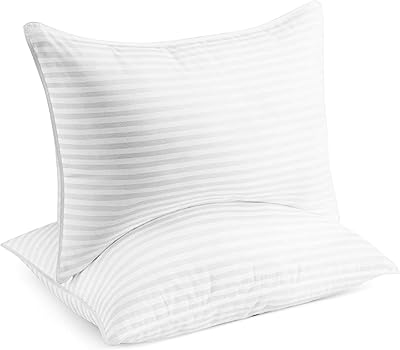
Beckham Hotel Collection Gel Pillow (2-Pack) - Luxury Plush Gel Pillow - Dust Mite Resistant & Hypoallergenic - Queen

 Beckham Hotel Collection Gel Pillow (2-Pack) - Luxury Plush Gel Pillow - Dust Mite Resistant & Hypoallergenic - Queen

WASHING PILLOWS: TRICKS FOR A GOOD CLEANING


HOW TO WASH PILLOWS: TRICKS FOR A GOOD CLEANING

The  pillows  are, with a good mattress, essential parts for a quality sleep. Many times we think that a  protective cover is enough to keep them in good condition,  but the truth is that with the passage of time a  thorough cleaning  and, above all, disinfectant is necessary. Also, taking into account the material in question, pay attention to these instructions on how to wash the pillows and the tips for a good cleaning.


CAN I REALLY WASH MY PILLOW?

The answer to this question will have to be consulted, never better said, with the pillow. No, you do not have to wait 8 hours of restful sleep to decide to wash it, it is the pillow itself that has  a label in which the washing symbols appear  that inform about 3 possible options:

  • 1.  Machine wash the pillow . In this typology there are usually feather and synthetic pillows.
  • 2.  Wash the pillow by hand .
  • 3.  Do not wash the pillow with water  or do not wet under any circumstances.

If your  pillow  is among the first 2 possibilities, you will know that the day of its washing has arrived when you remove the cover and begin to see that it begins to yellow or light rounded edges appear. Although an optimal approximate date of 6 months is recommended in case the pillow is covered by a protective cover, a visual and olfactory inspection of the surface, the best proof that it is time to wash it.

If your pillow is in option 3, it is because you probably do not need it, since they belong to a type whose material already includes the possibility of maintenance without water and it is enough to wash its cover.

WHY WASH YOUR PILLOW

First of all for your health . Although it is convenient to cover it with a removable protective cover for washing, we would be surprised to know what it means, in terms of health, to rest your head on this support night after night. In doing so, we deposit remains of skin, hair and moisture from perspiration and saliva.

All these bodily remains are an army of enemies of hygiene. As much as we often wash the textiles that protect the bed, dust mites and dirt are penetrating the pillowcases, the protector and the sheet set at least, until they reach their core.

Not washing the pillows has always seemed "normal" but they can last us longer and we will  sleep in a safer and healthier way if we do not do so in a possible source of bacteria, viruses and even fungi , something very harmful for the development of allergies and respiratory and skin conditions. In addition, then there is the issue of stains if the pillow did not have a protective cover from the beginning or if you are one of those people who finds having breakfast in bed one of the best pleasures of the weekend.

HOW TO WASH THE FEATHER PILLOWS

Always taking a look at the manufacturer's instructions,  the feather pillows that can be washed in the washing machine  have to follow some steps so that their firmness and soft support is the same as always:

• If it has stains, you can rub the surface with a brush slightly dipped in bleach diluted in water, always without penetrating the core where the pens are housed.

• In the washing machine, it is  better to wash two pillows together  and insert between them two or three clean tennis balls or, if used, wrapped in plastic. In this way we will help not to weigh down the feathers. Choose a wool / delicate program no more than 40 degrees and do not spin if you have a tumble dryer. In case of centrifugation, do it at low revolutions and finish this process in the air by spreading the pillows in a horizontal position during a hot season to avoid the formation of fungi inside. Always use a detergent for delicate clothes.

•  Drying . Look at the information on the label about this procedure but the normal thing is that, if admitted by machine, the drying lasts at low temperature for at least 1 hour. However, the best system is to check that the feathers are not caked by moisture, so open the dryer every 15 minutes and shake the feathers to loosen them.

Before washing, check the pillows for feathers and sew the seams  through which they leak.

If the pillow can only be hand washed and air dried, do so in hot weather so that there is no moisture inside and shake the inside from time to time, just like in machine drying. In case of not admitting water, observe the label and consult a professional of the dry cleaner.

HOW TO WASH THE LATEX PILLOW

Latex can be washed but carefully . Almost certainly, the label is going to recommend cleaning it in a dry cleaning service or by hand, although not intensively. That is, soak it in water for a short time and wash it with a mild detergent without rubbing too much. Spread it out to dry in the shade and reduce the liquid by absorbing it with kitchen paper.

HOW TO WASH THE VISCOELASTIC PILLOW

These pillows  cannot be washed with water  as their material is immediately damaged, losing the ergonomic and support properties and, as often happens with latex, their materials are made with hypoallergenic components that prevent the appearance of bacteria and mites , so it is not necessary to wash it with water.

Remove the cover and vacuum them frequently and, if there are any stains, rub it gently with a product recommended by the manufacturer. In order not to get to this point, because  any hint of moisture does not help at all to its maintenance , ask yourself how often you remove the protective cover to wash it.

Taking care of your pillow is taking care of your health. On many occasions we forget its maintenance and cleaning but remember that every night you rest your head on it to have your best dreams. Now you can rescue her with these tips on how to wash pillows: tricks for a good cleaning.


Beckham Hotel Collection Gel Pillow (2-Pack) - Luxury Plush Gel Pillow - Dust Mite Resistant & Hypoallergenic - Queen