Monday, March 1, 2021

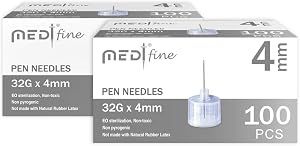
MedtFine Insulin Pen Needles 32G 4mm (5/32") 200 Pieces (2x100)

 MedtFine Insulin Pen Needles 32G 4mm (5/32") 200 Pieces (2x100)

  •     Compatible with most insulin pens
  •     Triple sharpened ultra fine needle with thin wall technology that ensures better liquid flow
  •     EO sterilized, Non-toxic and Non-pyrogenic
  •     Package of 2 boxes


The 10 foods that lower blood sugar


The foods that we recommend below have a low Glycemic Index and are rich in fiber, which helps control blood glucose levels. Including them in your diet is key to controlling diabetes, and if you are not diabetic they help prevent you from developing it.

1/10 Rye bread
Bread is often a "forbidden" food for diabetics because it is rich in simple carbohydrates that quickly raise blood sugar. Nevertheless...

  • Rye, spelled and 100% whole wheat bread have a Glycemic Index below 55, which gradually releases glucose into the blood and does not cause sharp spikes.

2/10 Sweet potato
Potatoes have a high glycemic index, which raises blood sugar quickly, but sweet potatoes have a low glycemic index and are just as nutritious.

  • In addition, the meat of the sweet potato contains even more fiber than the skin, so it is especially convenient if you suffer from diabetes.

3/10 Apple
With the exception of pineapple and cantaloupe, most fruits have a low glycemic index, especially apples and blueberries.

  • This is due to its high water and fiber content that compensates for its natural sugar (fructose).
  • Keep in mind that, as fruits ripen, the Glycemic Index (GI) increases. Fruit juices also have a high GI because some of the fiber is removed. So when you prepare them at home, at least don't strain them and the loss will be less.

4/10 Oatmeal
Oatmeal has a double advantage:

  • It has a GI below 55 and contains a type of fiber (beta-glucans) , which helps maintain glycemic control by improving insulin sensitivity.
  • The most recommended in case of diabetes is its bran. Its flour is also healthy, although it should be consumed in small quantities because it is rich in carbohydrates (1 cup contains 28 g of carbohydrates).

5/10 Walnuts
They are very rich in dietary fiber and their GI is low.

  • They are also a source of phytochemicals like flavonoids, minerals like potassium and magnesium, and antioxidant vitamins that help improve insulin resistance.
  • Ideally, the nuts should be as less processed as possible. Those with flavorings or coatings have higher GI values.

6/10 Vegetables
Chickpeas, lentils, beans or peas have a low glycemic index and, above all, a lot of fiber.

  • Several studies have shown that the incorporation of legumes in the diet improves glycemic control and reduces the risk of coronary heart disease in people with type 2 diabetes.
  • Ideally, take 3 servings a week.

7/10 Garlic
The medicinal virtues of garlic have been well known for centuries. But, in addition, it has been scientifically proven that it contains compounds that help improve insulin resistance.

  • Research from the American Chemical Society has shown that its antioxidants protect the heart from diabetes-induced heart disease.
  • You can take it raw, add it to salads or use it as a dressing to flavor your dishes.

8/10 Cod
Fish, like meat, does not contain carbohydrates, so its GI is 0.

  • However, in a study carried out with Norwegian women for 5 years, it was observed that the consumption of cold-water fish, especially cod, helps control and prevent diabetes, which is not the case with meat.
  • Whenever possible, it is best to choose fish as a source of protein in your diet.

9/10 Yoghurt
Eating yogurt daily helps reduce the risk of type 2 diabetes.

  • This was demonstrated in a large meta-analysis carried out in 2014, according to which yogurt is the only dairy that reduces the risk of this disorder.
  • Of course, the yogurt must be natural. The sweetened or flavored ones contain sugar and sweeteners that obviously should be avoided if you have diabetes.

10/10 Avocado
Consuming 100 g of avocado daily (a quarter of a large piece) helps reduce cholesterol and glucose levels.

  • The reason is that it contains 9 g of fiber per 100 g of food, which prevents blood glucose levels from rising rapidly.
  • The good fats in avocado also help improve cardiovascular health.

Sunday, February 28, 2021

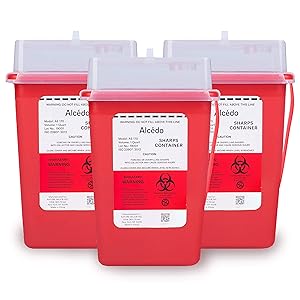
Alcedo Sharps Container for Home Use and Professional 1 Quart (3-Pack) | Biohazard Needle and Syringe Disposal | Small Portable Container for Travel

 Alcedo Sharps Container for Home Use and Professional 1 Quart (3-Pack) | Biohazard Needle and Syringe Disposal | Small Portable Container for Travel

  •  DURABLE AND HIGH QUALITY – The durable and high-quality sharps container is constructed of puncture and impact resistant material.
  • PERFECT FOR PROFESSIONAL AND HOME USE – The sharps container is ideal for use in hospitals, labs, and clinics or at home by diabetics who need a small transportable container to dispose of biohazard needles and syringes waste.
  • LIGHT WEIGHT AND COMPACT – The sturdy light-weight container is perfect for phlebotomists (blood draw professionals) or others who need a small portable sharps container. Use it at home, at work, anywhere you go.
  • EASY TO USE – The handle on the container allows easy carrying. Clear lid allows a view of the fill level, temporary closure for safety, and snap locks for final disposal.
  • STRICT QUALITY STANDARD – Each container is labeled with usage instructions to dispose of medical waste safely and responsibly. Meets OSHA and EPA requirements for local biohazard waste collection.


Handling needles and sharps


Send this page to a friend To print Facebook Twitter Pinterest
Sharps are medical devices such as needles, scalpels, and other tools that cut or penetrate the skin. Learning to handle these objects safely is important to avoid accidental cuts and needle sticks .

Injury prevention
Before using a sharp object such as a needle or scalpel, make sure you have all the items you need on hand. This includes items such as bandages, gauze pads, and alcohol wipes.

Also, know where the sharps disposal container is. Check that there is enough space in the container to accommodate the object. It should not be more than two-thirds full.

Some needles have a protective device, such as a cover, case, or blunt tip, that you actuate after removing the needle from the person. This allows you to safely handle the needle without the risk of exposure to blood or body fluids. If you are using this type of needle, make sure you know how it works before using it.

When working with sharps, follow these guidelines:

  • DO NOT uncover or unpack the sharp object until it is time to use it.
  • Keep the object pointed away from you and other people at all times.
  • Never recap or bend a sharp object.
  • Keep your fingers away from the tip of the object.
  • If the item is reusable, put it in a secure, closed container after use.
  • Never pass a sharp object to someone or put it on a tray for someone else to pick it up.
  • Let the people you work with know when you plan to drop off the item or pick it up.
  • Sharps disposal
  • Verify that the waste container is made to dispose of sharps. Replace containers when they are two-thirds full.

Other important tips include:

  • Never put your fingers in the sharps container.
  • If the needle has tubes attached to it, hold both the needle and tubes when putting them into the sharps container.
  • Sharps containers should be at eye level and within reach.
  • If a needle sticks out of the container, do not push it with your hands. Call to have the container removed. Or a trained person can use tweezers to push it back into the container.
  • If you find a sharp object uncovered outside a waste container, it is safe to pick it up only if you can grasp the end that is not sharp. If you can't, use tweezers to pick it up and throw it away.


Sanitary Practices for Disposable Syringes


Most immunization programs in the Americas use disposable syringes to deliver vaccines. During natural disasters, such as that caused by Hurricane Mitch, all health personnel (international volunteers and national personnel) must ensure that the PAHO / WHO guidelines are followed, to guarantee the sanitary use of disposable injection equipment and that the Appropriate equipment is available to collect and dispose of contaminated syringes and needles. This especially applies when normal methods of operation cannot be followed, either because the collection of medical waste has been interrupted, or because the facilities where it must be properly destroyed are not working.

PAHO / WHO recommends the following standards:

  • The "self-destructing" syringes [a] are the preferred type of disposable injections with which vaccines are given and the material of choice for carrying out immunization campaigns in large numbers of people.
  • Healthcare workers should not refuse needles.
  • Used disposable syringes should be collected in "Safety Boxes", which are puncture resistant containers designed to collect injection equipment.
  • The "Safety Boxes" or similar containers where contaminated inoculation equipment is collected, must be transported with great care to an incineration site.
  • If incineration facilities or sites do not exist or are not in service, "Safety Boxes" can be burned in a pit or something similar, for example a metal barrel. Burned needles can be safely buried or disposed of with other trash.
  • Failure to comply with these standards can put public health at risk as the inoculation material could be reused exposing people to disease and death.
  • Healthcare workers who refuse needles risk infectious diseases from accidental needle sticks. The public could be accidentally stuck if needles and syringes are not properly destroyed.

Sharps Container for Home Use and Professional 1 Quart (3-Pack) by Alcedo | Biohazard Needle and Syringe Disposal | Small Portable Container for Travel

 Sharps Container for Home Use and Professional 1 Quart (3-Pack) by Alcedo | Biohazard Needle and Syringe Disposal | Small Portable Container for Travel

  •  DURABLE AND HIGH QUALITY – The durable and high-quality sharps container is constructed of puncture and impact resistant material.
  • PERFECT FOR PROFESSIONAL AND HOME USE – The sharps container is ideal for use in hospitals, labs, and clinics or at home by diabetics who need a small transportable container to dispose of biohazard needles and syringes waste.
  • LIGHT WEIGHT AND COMPACT – The sturdy light-weight container is perfect for phlebotomists (blood draw professionals) or others who need a small portable sharps container. Use it at home, at work, anywhere you go.
  • EASY TO USE – The handle on the container allows easy carrying. Clear lid allows a view of the fill level, temporary closure for safety, and snap locks for final disposal.
  • STRICT QUALITY STANDARD – Each container is labeled with usage instructions to dispose of medical waste safely and responsibly. Meets OSHA and EPA requirements for local biohazard waste collection.

NEEDLE DESTROYERS


Destroy all contamination hazards. Wherever there is a used needle, there is a risk of infection; By destroying it, all transmission risks are eliminated.

The EMISON portable needle destroyer is the ultimate means of eliminating the risks of contamination by hypodermic needles providing total safety. Its light weight and small dimensions facilitate its transport, and once the syringe is used, the needle can be destroyed directly in home treatments.

It totally destroys the needles by calcining them through the passage of a low voltage and high intensity electric current. A small receptacle and a high temperature of1400 ° C they make it possible to instantly incinerate the used needle and with it any chance of contamination.

It eliminates the risks of covering the needles and offers more guarantees to avoid contagion risks than the use of containers. Its operation, very simple, is limited to inserting the needle into the device, without even removing it from the syringe, leaving it completely disintegrated in less than a second.

Its small weight and size make it easily drinkable. Connected to the 230 Volt electrical network, it allows working without interruption.

Combustion residues are collected in the inner tank, easily accessible for cleaning. Its capacity is 4,000 needles destroyed

Completely sure its price is 375 Euros. The delivery time is immediate, except for sale.

The cabinet EMISON Needle Destroyer is the ultimate means of eliminating the risks of contagion from hypodermic needles, acupuncture needles, tattoos, scalpels or lancets, providing total safety.

It totally destroys the needles by calcining them through the passage of a low voltage and high intensity electric current, provided by a robust transformer. It offers more guarantees than the use of containers.

Connected to the 230 Volt 50 Hz electrical network, it allows to incinerate about 4 elements per minute without risk of overheating, and its price is 780 Euros.

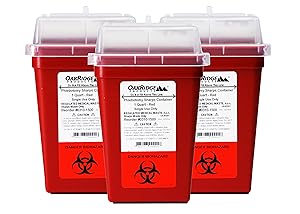
OakRidge Products 1 Quart Size (Pack of 3) Sharps Disposal Container - Approved for Home and Professional use

 OakRidge Products 1 Quart Size (Pack of 3) Sharps Disposal Container - Approved for Home and Professional use

  •  GREAT FOR HOME-. Ideal for diabetics. Fits perfectly on bathroom countertops. Keeps contaminated waste safe from pets and small children - Safe disposal of needles, needles with syringes, pen needles, lancets, blades (razors, scalpels, etc.
  • GREAT FOR BUSINESS - Designed for use by phlebotomists or others who need a small transportable container. The vertical drop maximizes useable container volume while providing a space saving option for totes, carts and work spaces.
  • LIGHTWEIGHT AND COMPACT - Perfect for traveling and on the go use. Fits easily into a medium sized purse backpack, gym bag, or luggage. Clear lid allows a view of the fill level, temporary closure for safety, and snap locks for final disposal.
  • GOLD STANDARD in Sharps Containers - this the SAME product we sell to Doctors and Hospitals all over the country. We are a US manufacturer. PRODUCT DIMENSIONS: 4"L X 4"W X 6.25" H
  • COMPARE FIRST - our competitor's "1 quart" products look very similar but they are actually about 20% smaller than ours. Oakridge would never mislead our customers. Our product is really a full 1 quart in size.


Sharps Disposal Containers


FDA Approved Sharps Containers
The FDA recommends that used needles and other sharps be placed immediately in FDA-approved sharps disposal containers. FDA-approved sharps disposal containers are generally available at pharmacies, medical supply companies, healthcare providers, and online .

The FDA has evaluated the safety and effectiveness of these containers and has approved their use by healthcare professionals and the general public to help reduce the risk of injuries and infections from sharps.

FDA-approved sharps disposal containers are made of rigid plastic and have a line marking when they should be considered full, which means it is time to dispose of the container. Below are examples of FDA approved sharps containers:

There are FDA approved sharps containers available in a variety of sizes, including some small ones that can be taken on the road and used when you are away from home.

Safe alternative to FDA approved containers
homemade containerIf an FDA-approved container is not available, guidelines from some organizations and communities recommend the use of a sturdy plastic homemade container as an alternative. The container should be leak-proof, stand upright during use, and have a tight, puncture-resistant lid, for example a plastic detergent container.

Homemade containers should have the same basic features as a good sharps disposal container:

  • Made of heavy duty plastic
  • Can be closed with a tight, puncture-resistant lid so sharps can't get out
  • Stays upright and stable during use
  • Leak proof
  • With appropriate labels to warn of hazardous waste inside

When your container is 3/4 full, follow your community guidelines for proper disposal.

What to do if you can't get a sharps disposal container
The safest way to dispose of a used needle is to immediately place it in a sharps disposal container to reduce the risk of needle sticks, cuts, and puncture wounds caused by loose sharps. If you cannot immediately find a sharps disposal container, you may need to recap the needle or use a needle cutter until you can dispose of the sharps in an appropriate container. Never throw loose needles or other sharp objects into trash cans or recycling bins, and never flush them down the toilet.

Needle cutters

There are products that serve to safely store used needles, both at home and when traveling. These devices are generally available for sale in pharmacies and medical supply stores.

A needle cutter automatically stores cut needles when a disposal container is not available. The remainder of the syringe, after the needle is cut, can be placed in a homemade container or a sharps container. When the needle cutter is full, empty the needles into a household container or sharps container and dispose of it according to your state regulations.

needle destroying deviceA needle destroying device is a small, portable machine that incinerates needles, melting them into pellets the size of pellets. Once the needle is destroyed, the remainder of the syringe and molten metal can be safely disposed of with standard (not recycling) waste. These devices, previously only used in healthcare facilities, are now available for use at home.

Before using any of the above procedures, check your community guidelines for acceptable sharps disposal methods.

When recapping
If you need to recap the needle, do not bend or break the needle and never remove a hypodermic needle from the syringe by hand. Doing so could lead to punctures, cuts, or puncture wounds. To replace the cap you must use a mechanical device or the one-handed technique (see step-by-step instructions below).

Needles that have been capped should be placed in a waste container at the earliest opportunity.

One-handed needle cover method :

  1. Step 1: Place the lid on a flat surface, such as a table or counter, next to something firm against which you can "push" it.
  2. Step 2: Holding the syringe with the needle in one hand, slide the needle into the cap without using the other hand
  3. Step 3: Using only one hand, push the needle with the cap against a firm object to "seat" the cap firmly on the needle.

Dos and Don'ts for Proper Sharps Disposal :

  • DO put used needles and other sharps in a sharps disposal container right away to reduce the risk of needle sticks, cuts, and puncture wounds from loose sharps.
  • DO use an FDA approved sharps disposal container, if possible. If an FDA-approved container is not available, guidelines from some organizations and communities recommend the use of a sturdy plastic homemade container as an alternative.
  • DO make sure that using a homemade container has the basic characteristics of a good disposal container.
  • DO carry a portable sharps container with you when traveling.
  • DO follow your community guidelines for disposing of your sharps container.
  • DO call your local public health or garbage collection department (listed in the city or county government section of your phone book) to find out about sharps disposal programs in your region.
  • YES ask your healthcare provider, veterinarian, hospital or pharmacist
  • where and how you can get an FDA approved sharps disposal container,
  • whether they can receive your used needles and other sharps, or
  • if you know of other sharps disposal programs nearby.
  • DO keep all sharps disposal containers out of the reach of children and pets.
  • DO seal your sharps containers before disposing of them, label them appropriately and consult your community guidelines for proper disposal.
  • DO ask your health or drug insurance provider if they cover sharps disposal containers.
  • DO ask the manufacturer of your pharmaceutical products that require needles or other sharps if they offer their patients free sharps disposal containers.
  • DO report problems related to sharps disposal containers.
  • DO NOT throw loose needles or other sharp objects in the trash.
  • DO NOT flush needles or other sharp objects down the toilet.
  • DO NOT put needles or other sharps in the recycling bin - they are not recyclable.
  • DO NOT try to remove, bend, break, or recap needles that someone else has used. Doing so can lead to an accidental puncture, which can cause serious infections.
  • DO NOT try to remove the needle without a needle cutter, as the needle may fall, get thrown, or become misplaced and injure someone.

Care Touch Multi Colored Twist Top Lancets 30 Gauge, 300 Lancets

 Care Touch Multi Colored Twist Top Lancets 30 Gauge, 300 Lancets

  •     MULTI COLORED - Why not make blood testing more fun? Great for kids to help ease the discomfort by making it more exciting. Compares to Microlet Lancets
  •     TRI-BEVELED TIP - The lancets triple sharpened needles, minimizes skin trauma and discomfort
  •     GAMMA STERILIZED - The Care Touch Lancets are gamma sterilized for a long shelf life
  •     PAIR WITH CARE TOUCH LANCING DEVICE - Our lancing device is a best seller. It has 10 depths to choose from and is good for finger and alternate site testing. These lancets are compatible with most lancing devices. It is generic for Microlet Lancets
  •     CARE TOUCH DIABETIC SUPPLIES - Check out our alcohol pads, pen needles, testing kits and more for all your diabetic supplies.


Importance of capillary blood sampling


Capillary blood sampling and its relevance to obtain correct hemoglobin measurements

Capillary blood sampling (fingerstick) is being increasingly used around the world due to the increasing availability of portable hemoglobin analyzers at the point of patient care.

Considering that 25% of the world population is affected by anemia, with a much higher prevalence in developing countries, hemoglobin analysis is the most frequently performed test in hematology. This test is also used routinely by blood collection services (blood banks) to ensure safe donation. At the same time, hemoglobin (Hb) values ​​are among the most likely to be affected by pre-analytical errors, so to avoid generating misleading hemoglobin results, health personnel who draw blood must adhere to blood collection techniques. Strict and standardized blood tests to ensure accurate and consistent results that are comparable to laboratory techniques.

Why is it important to have good capillary blood collection procedures for hemoglobin testing?

  • The use of capillary sampling is increasing worldwide as the use of diagnostic tests develops at the point of patient care
  • Hemoglobin is the most frequently performed test in point-of-care hematology
  • Hemoglobin results are prone to being affected by pre-test errors

Taking capillary blood sample performed incorrectly is the most common reason leading to inaccurate results hemoglobin at the point of patient care

  • Understand the common causes of pre-analytical errors
  • The variability in reported hemoglobin values ​​can be caused by a series of physiological factors such as dehydration, smoking habits or altitude, and can be significantly affected by pre-analytical errors arising due to an incorrect capillary blood collection technique. Here are some of the most common sources of error that healthcare personnel should be aware of.
  • Correct lancet option : The lancet must be of minimum dimensions so that when performing a puncture it guarantees an adequate blood flow. For adults, a depth of 1.85 to 2.25 mm is recommended. The thickness of the lancets should be 21G , which guarantees a blood volume range of 75 - 125 microliters
  • Correct selection of the puncture site : The middle or ring finger should be used, ideally from the non-dominant hand, as they are generally less callused and less sensitive to pain compared to the index finger or thumb. The thumb should also be avoided due to its pulse (arterial presence). In the little finger, the distance between the surface of the skin and the bone is too small. The puncture should be done slightly off-center from the central fleshy part of the fingertip, near the side where the skin is thinner with fewer nerve endings and less pain sensation, but not on one side of the finger. Selecting the correct finger and puncture site will ensure consistent good blood flow and minimize pain for the patient.
  • Cleaning, disinfection and drying : Cleaning and disinfection of the puncture site is essential to remove any potential contamination that could affect the test or put patient safety at risk. The puncture site should also be thoroughly dried, after cleaning, to remove any residual alcohol solution that will dilute the blood sample and cause false low readings.
  • Applying too much pressure around the puncture site : The finger can be gently massaged before and after puncture to stimulate blood circulation, but not past the first knuckle. Maintaining light pressure when drilling ensures effective penetration. However, the finger should not be pressed too hard as this will push fluid from the tissue into the blood and cause false low readings.

The importance of time and blood flow
Another key factor influencing hemoglobin measurement is capillary flow. Typically for hemoglobin, the first 1-3 drops after puncture show a greater degree of variability in hemoglobin concentration, regardless of the analytical device used for the test. It is for this reason that these first drops of blood must be discarded.

Generally, the highest precision is achieved from the fourth drop after puncture, when good capillary flow is achieved over a period of 30-45 seconds. Blood draws obtained after this time may result in inaccurate hemoglobin results.

The most important factor to reduce pre-analytical errors is the presence of a free spontaneous blood flow, especially since neither the size of the drop nor the moment of taking after the puncture are well defined and the manufacturer's recommendations on this subject vary.

A step-by-step guide to capillary blood sampling best practice

The following steps demonstrate how to collect an appropriate capillary blood sample to ensure accurate hemoglobin measurements at the point of patient care. :

  • Wash your hands well and put on tight-fitting gloves (they do not need to be sterile). Make sure that all items for capillary blood sampling and testing are available and within easy reach.
  • Select the middle or ring finger, ideally the non-dominant hand. The patient should not wear a finger ring as it can obstruct blood circulation.
  • Ensure that the patient's hand is warm and relaxed and that the patient is comfortably seated. Puncture should be done slightly off-center from the fleshy portion, near the side of the fingertip.
  • Disinfect and completely dry the puncture site. Alcohol can dilute the sample. Dry well before taking.
  • Gently massage finger towards tip to increase blood flow. Avoid passing the first knuckle.
  • Make the incision on the fingertip side, palm up, to facilitate filling of the hemoglobin cuvette. Apply only light pressure towards the fingertip until a drop of blood appears. It may take a few seconds after the puncture for blood flow to begin.
  • Wipe off the first 2-3 drops and make sure there is a free flow of blood before filling the cuvette. Stop holding your finger when wiping a drop.
  • Make sure you have a drop of blood large enough to fill the cuvette. Fill the bucket completely in one go. Avoid air bubbles. Always refer to the instructions for use provided by the manufacturer of the hemoglobin analyzer.


Venipuncture


It is the collection of blood from a vein. In most cases, it is done for laboratory tests.

How the test is performed
Most of the time, the blood is drawn from a vein located on the inside of the elbow or the back of the hand.

  • The site is cleaned with a disinfectant (antiseptic).
  • An elastic band is placed around the upper arm to apply pressure to the area. This causes the vein to fill with blood.
  • A needle is inserted into the vein.
  • The blood is collected in an airtight vial or in a tube attached to the needle.
  • The elastic band is removed from the arm.
  • The needle is removed and the site is covered with a bandage to stop the bleeding.

In infants or young children, a pointed instrument called a lancet may be used to puncture the skin and cause it to bleed. Blood is collected on a slide or test strip. A bandage may be placed over the area if there is any bleeding.

Preparation for the exam
The steps you need to take before the test depend on the type of blood test you are having. Many tests do not require special measures.

In some cases, your healthcare provider will tell you if you need to stop taking some medications before doing this test or if you need to go fasting. Don't stop or change your medications without talking to your provider first.

How the test will feel
You may feel slight pain or sting when the needle is inserted. You may also experience some throbbing at the site after the blood is drawn.

Reasons the test is done
Blood is made up of two parts:

  • Liquid (plasma or serum)
  • Cells

Plasma is the liquid part of the blood in the bloodstream that contains substances such as glucose, electrolytes, proteins, and water. Serum is the liquid part that remains after blood is allowed to clot in a test tube.

Blood cells include red blood cells, white blood cells, and platelets .

  • Blood helps move oxygen, nutrients, waste, and other materials through the body. It also helps control body temperature, fluid balance and acid-base balance of the body.

Tests done on your blood or parts of it can provide important clues about your health to your provider.

Normal results
Normal results vary according to the specific type of exam.

Meaning of abnormal results
Abnormal results also vary according to the specific test.

Alternative names
Blood collection; Phlebotomy

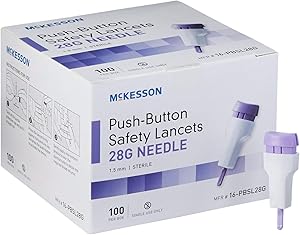
McKesson Lancet Push Button 28 Gauge 1.5 mm Depth 1 Box(s), 100 /Box

 McKesson Lancet Push Button 28 Gauge 1.5 mm Depth 1 Box(s), 100 /Box

  •  Color: Purple
  • 28 Gauge Needle
  • Depth Penetration: 1.5 mm
  • Features needle for finger sample
  • Sterile

Capillary puncture


  • Qualification
  • Capillary puncture.

Goals

  • Know the methods of blood collection .
  • Correctly perform capillary blood extraction.

Basis
Extraction methods allow us to collect blood samples for analysis in the laboratory. In other words, it allows us to obtain an adequate blood sample to carry out its hematological, biochemical or microbiological analysis.

Among the methods of blood extraction we find the capillary puncture. This consists of using a lancet and pricking a finger. Preferably the first phalanx of the ring finger, that is, its most distal phalanx, is pricked. The middle finger or index finger can also be used.

It is a technique that has the disadvantage of having to quickly spread the drop of blood obtained before it clots. It also presents difficulty and impossibility of obtaining a large quantity of blood and introducing it into a tube with anticoagulant.

There is some controversy with the use of the capillary puncture technique as to who should and who should not perform it. Today it is a mandatory technique to use, together with a glucometer, in patients with diabetes. Their relatives are forced to learn the technique to have a thorough control of blood glucose levels. The controversy arises from the peculiarity that relatives and patients are not health personnel.

Material

  • 70º alcohol.
  • Guatis.
  • Ballpoint.
  • Lancets
  • Slide where the extension will be made.
  • Slides with ground edges.
  • Filter paper.
  • Yellow waste container.

Technique

  • Clean and disinfect the finger that we are going to prick.
  • Load the pen with the lancet.
  • Lightly massage the finger to ensure adequate and sufficient blood flow.
  • Prick the finger with the lancet.
  • Press a little to obtain drops of blood.
  • Discard the first drop.
  • Obtain a second drop and use it to make a blood smear.
  • Discard the lancet in the waste container.

Results
Capillary puncture

In this image we can see part of the material. 70º alcohol, lancets, pen, blood smear slide, guatis and, of course, the filter paper.

Capillary puncture

Here we can appreciate the collection of capillary blood in a test tube. This photo really belongs to the reticulocyte staining practice, which we will see in the future.

Observations
In the face of cold nerves and hands, a peripheral vasoconstriction occurs that makes the ideal result of the technique very difficult, since due to this it is practically impossible to obtain a drop of capillary blood.

You should also avoid pressing the finger too much to obtain a drop of blood, because we can hemolyze the red blood cells.

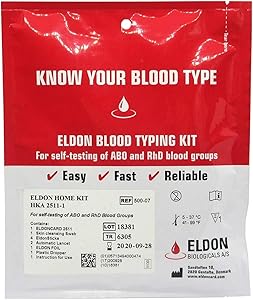
EldonCard Blood Typing Test Kit, 5-Pack

 EldonCard Blood Typing Test Kit, 5-Pack


  •     Each kit performs only 1 test
  •     1 spring-loaded, sterile auto-lancet, 1 Blood typing test card, 1 Sterile cleaning swab, EldonSticks sample collection and transfer devices, 1 Transfer pipet, Laminating sheet, Color result chart and Instructions
  •     An at home kit to quickly determine human blood type A, B, AB, O and rhesus factor Rh +/-.
  •     You Are Receiving 5 Test Kits Good For One Use Each


Capillary sample


It is the collection of a blood sample that is obtained by pricking the skin. Capillaries are tiny blood vessels near the surface of the skin.

How the test is performed
The exam is performed as follows:

  • The area is cleaned with an antiseptic.
  • The skin on the finger, heel, or other area is punctured with a sharp needle or lancet.
  • Blood can be collected in a pipette (small glass tube), on a slide, on a test strip, or in a small container.
  • Cotton or a bandage may be placed at the puncture site if there is any ongoing bleeding.

How the test will feel
Some people feel moderate pain, while others feel only a prickling or prickling sensation. Afterwards, there may be some throbbing sensation.

Reasons the test is done
Blood carries oxygen, nutrients, waste products, and other materials within the body. It also helps regulate body temperature. Blood is made up of cells and a fluid called plasma. Plasma contains various dissolved substances. The cells are mainly red blood cells, white blood cells, and platelets .

Because blood has multiple functions, tests on it or its components provide valuable clues in diagnosing conditions.

Capillary blood sampling has many advantages over blood drawn from a vein:

  • It's easy to get (it can be difficult to get blood from veins, especially in babies).
  • In the body, there are several collection sites and these sites can be rotated.
  • The test can be done at home and with little training. People with diabetes, for example, must check their blood sugar levels several times a day, using a capillary blood sample.

Disadvantages of capillary blood sampling include:

  • Only a limited amount of blood can be obtained by this method.
  • The procedure has some risks (see below).
  • Capillary blood sampling can cause inaccurate results, such as falsely elevated blood sugar, electrolytes, and blood counts.
  • Meaning of abnormal results
  • Results vary depending on the exam that is performed. Your healthcare provider can tell you more about this.

Risks
The risks of this test may include any of the following:

  • Excessive bleeding
  • Fainting or feeling dizzy
  • Infection (a slight risk any time the skin is broken)
  • Scarring (occurs when there have been multiple punctures in the same area)
  • Calcified nodules (sometimes occur in babies, but usually disappear by 30 months of age)
  • Damage to blood cells from this collection method can sometimes lead to inaccurate test results and the need to repeat the test with blood drawn from a vein.