Wednesday, February 10, 2021

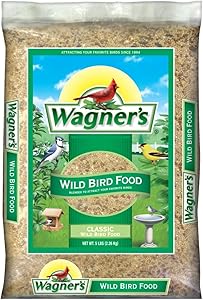
Wagner's 52001 Classic Blend Wild Bird Food, 5-Pound Bag

 Wagner's 52001 Classic Blend Wild Bird Food, 5-Pound Bag

  •  Attracts a range of backyard feeder birds
  • Contains sunflower and general purpose seeds
  • Can be fed in a tube, hopper, or platform feeders
  • Highest quality grains used
  • Made in the USA


Feed Wild Birds In Your Home With These Tips

My wife and I love to watch birds, enjoy their colors, behavior and songs. We are always looking for ways to attract more of them to our yard.

We live in Florida and at the end of August we get a little anxious to put the bird feeders with bird seed waiting for our first painted finch and goldfinches.

In this post, we share some essential tips on how to feed wild birds in your home that we have learned from our own experience over the years as well as from our neighbors who also share a passion for feeding wild birds.


There are three basic elements that one can offer the birds to come to your gardens and stay there.

  • A source of fresh water for drinking and bathing.
  • A good plant cover for nesting and hiding.
  • And a variety of quality food to eat.
  • Patience and Consistency are Very Important

After installing a bird feeder, it can take days or weeks for birds to discover your feeder. If a bird feeder is installed during the summer and spring when food is readily available to birds, it may take longer for them to start using your feeder. During the cold months of the year, birds need to consume more food to thermoregulate their bodies and they are hungry more often, therefore they are more likely to find feeders faster.

It seems that in areas where people regularly feed the birds, they will easily find and use new feeders in a shorter period of time.

Once the birds discover and use their feeder, it is very important to be consistent in keeping the feeder stocked. Birds are highly territorial and depend on food sources within their territories. They follow daily routes to forage and rely on their feeder as a food source. If the feeder is empty at times, the birds do not consider it a food source and may not include your yard in the daily feeding route.

What is the Best Season to Feed the Birds in Your House?

During winter, when insects, seeds and berries are scarce and depending on the region, snow cover can make it difficult to access food.

For birds that overwinter in regions where cold weather is prevalent, feeders can be a lifesaver during extremely cold periods. For migratory birds, feeders help them put on the fat and weight necessary for a successful migration flight.

Although food is more available during the spring and summer months, some birds will still visit your feeders if food is available.

Water for Drinking and Bathing

When it comes to water, birds get most of what they need from natural sources and rainwater. However, when they find a convenient source of water, such as a water feature in your yard, they will prefer it to distant natural sources. What better for a bird than to have to eat and drink in one place!

During periods of dry weather or in dry regions, a water feature will attract a large number and variety of birds.

It is very important that water is constantly available in your yard so that the birds depend on it and return when they are thirsty or need a bath. The water source will need to be filled or completely replaced depending on how you use it. If several birds drink and bathe in a water source, it will get dirty faster. Over time one will be able to determine how often the water needs to be changed.

Vegetable Cover

All birds need trees and shrubs for nesting, to hide from predators, and to protect themselves from the weather. Even if your yard is small, a mixture of shrubs and trees can give them hiding places in the summer and protection from the cold in the winter. While having a vegetative cover helps, feeders in yards with few or no trees and shrubs also attract common birds.

Some birds are quite shy and do not approach a feeder if there is not enough plant cover near the feeder, others do not need much cover. A good example is the goldfinches that only use the feeders near bushes. Neighbors who have little or no vegetative cover appear not to attract goldfinches to their feeders.

Food and Feeders

Nothing works better at attracting birds than the right food and feeders. It is especially true in areas where harsh winters and prolonged snow coverage make natural food sources difficult to access during winter. Additionally, birds burn more calories to keep warm during cold winter temperatures. For example, studies have shown that some birds eat twice as much in winter than in summer, this difference comes from the need to thermoregulate their body temperature.

Types of Wild Bird Food

Birds eat a wide range of seeds and food mixes. Depending on the season, many stores sell seeds that serve as food for birds. Some of the packages are labeled to indicate the type or combination of seeds contained in the package and the type of birds that these seeds or mixes attract.

The best thing is to buy quality food. If it is only one type of seed or mixes of seeds it is good to see what type of seeds are included in these mixes.

Seed mixes are popular because different mixes attract a wide variety of birds. However, be sure to choose mixes that don't have a lot of fillers that the birds won't eat and that are discarded by the birds creating a build-up of food and seed hulls under the feeder. Low-quality foods that birds often discard include sorghum, oats, and wheat. However, some birds, such as pigeons, turtle doves and sparrows, eat this food without problem.

Sunflower seed


If you are starting to feed wild birds, sunflower seed is the food to start with. The sunflower seed in its natural form has a shell that birds can open to eat the contents. However, the husks fall to the ground and this can create a build-up of debris that needs to be cleaned. Peeled sunflower seed is also sold on the market.

Thistle Seed

Thistle seed is highly preferred by all birds, particularly those with small beaks, such as finches and goldfinches. The thistle seed also has a seed that the birds peel and discard. Thistle seed is cultivated and consumed by people in parts of Africa, India, and Asia, but is known as a seed for feeding birds in other parts of the world. This seed must be sterilized before export, which in addition to the cost of importing from abroad results in one of the most expensive bird seeds.

Seed Mixes

Seed mixes are an option for those starting to feed birds. Various types of food attract a wide variety of birds. Seed mixes sometimes include additives that birds do not eat and dump from the feeder creating a build-up of litter under the feeder. It is recommended to choose seed mixtures with few additives.

Millet Seed

Millet seed is a common ingredient in most wild bird food mixes. This seed comes in various colors such as gold, red and striped, all of which have similar nutritional content. Millet seed is relatively easy to produce and cheap. These seeds can last a long time in the feeder, as the grains are tiny compared to sunflower seeds.

Prepared tallow

The tallow is for birds that normally do not go near seed feeders, such as warblers, woodpeckers, thrushes, nightingales and magpies among others. These tallow are made from animal fat mixed with seeds, worms and even pieces of meat. These tallow can soften and even melt during hot weather and can permeate the feathers causing problems for the birds. It is recommended that the tallow be offered to the birds during the winter months.

Nectar

Natural nectar is an energy-rich liquid produced by some flowers to attract pollinators. Hummingbirds like nectar, but orioles, honeys, and tanagers also enjoy it. Artificial nectar can be purchased in powder, concentrate, and ready-to-drink forms. Nectar can also be easily made at home using a simple recipe that mimics the concentration of sugar in natural nectar. If you prefer commercially produced nectar, avoid varieties that include colors, flavorings, or preservatives that could be dangerous to birds.

Ground corn

Other types of foods that can be fed to birds include fruit, ground corn, birdseed, mustard seed, and peanut butter. These can be offered to birds alone or as mixtures of two or more types. Sorghum, oats, and wheat are also consumed by some birds.

Which Feeder is Good for Feeding Wild Birds?

Some birds prefer a particular type of feeder. Some species forage for food on the ground, others in bushes, and others in trees. Some normally perch on horizontal branches, while others have no problem holding on to vertical perches or even eating with their head down.

The birds that normally feed on the ground are reluctant to use feeders placed above the ground, while that feed on trees and shrubs are reluctant to use feeders on or near the ground. Ideally, one would use several types of feeders with various types of food placed at various levels in height to attract a wide variety of birds.

Platform or Tray Type Feeder

Platform feeders are the simplest and most effective for feeding a wide variety of birds. When filled with a diverse type of food, platform feeders attract many species of birds. Raised feeders have the advantage that the seed does not spoil as quickly as seeds placed directly in the ground.

Tube Type Feeder

The tube feeder is the best option if you are going to have only one type of feeder in your yard. Fill it with a seed mixture and you will attract a lot of birds. Some tube feeders are specifically made for thistle and millet seeds for birds with small beaks.

Tallow Feeder

There are several types of tallow feeders. Cage-type feeders are the most popular and are typically made from coated wire. Esebado trunk consists of a trunk with pre- drilled holes, which are used to insert small blocks of tallow. Mesh bags , which are filled with tallow and hung for small birds which cling to the bag to eat the tallow.  Open trays are good for setting chunks of tallow for many birds to taste. This is also a great way to get birds that don't know tallow to taste it.

House Type Feeder

Hopper or house-type feeders can hold a good amount of food for birds. These types of feeders are easily used by many species. If your feeder is newly installed and the birds haven't found it yet, be sure to fill the feeder only a third full so the seed doesn't spoil. Once the birds find their feeder and the demand for feed increases, then you can fill the feeder a bit more.

Window Feeder

Window feeders are great for seeing birds up close through your window. These feeders are easy to install and maintain. This type of trough is used in apartment buildings and also in windows in houses. There are two types of window feeder: those that stick to the glass through suction cups and those that are attached to the base of the window. Some window base feeders protrude into the house through the open window, while others are secured outside the closed window.

Where to Place the Feeders for Wild Birds?

Bird feeders can be hung from an existing structure, such as a porch or wooden column. You can also cross a wire across part of your patio and hang the feeder in the middle; or also use another creative way to place a feeder. The most common way to mount a feeder is by using a pole with hooks to hang the feeders. These poles can be purchased ready-made or made by yourself.

feeders for wild birds

Mount feeders in an open area at least 10 feet away from trees and shrubs. This will give the birds a chance to flee from predators, such as raptors, which may hide in bushes or trees.

Hang the feeder at least 5 feet off the ground to prevent squirrels or mice from reaching the feeder. Deflectors or other obstacles can also be used to prevent other animals from destroying the bird food.

Tallow feeders can be placed on tree trunks for the birds that normally feed there. Platform feeders can be mounted several inches off the ground or higher. Some put seeds directly into the ground.

If you plan to put a bird feeder near a window, be sure to do so within two to three feet of the window. Birds can be confused by the reflection in the glass and try to fly through it thinking it is an open space. But with the feeder so close they can't get enough speed to injure themselves.

What Size and How Many Bird Feeders?

This will depend on the number of birds visiting your yard and your willingness to feed more birds. Large feeders at various sites will provide food for all birds. Multiple feeders help prevent certain birds from taking over a feeder and not letting others get close to eating.

The birds that take over the feeder may be a particular individual of a species that for some reason scares off other birds. It can also be a whole group of birds such as house sparrows because they come in flocks and are aggressive towards each other and other birds.

Some bird enthusiasts increase the number of feeders during winter when food is more difficult to obtain from the environment. Others maintain a single feeder throughout the year.

feed hummingbirds


Feeding the Hummingbirds, Hummingbirds, or Buzzers
People love to feed hummingbirds and feeding them can help them survive before and during migration when they need a lot of nectar to double their body mass. This is particularly important in regions where hummingbirds migrate.

Hummingbirds are known as hummingbirds or hummingbirds in different regions of South America.

The nozzles that deliver nectar to hummingbirds are similar in almost all hummingbird drinkers, but the bottle that contains the nectar varies in size and shape.

The typical hummingbird feeder or trough consists of a glass bottle that is screwed to the base that contains the plastic flowers and nozzles that supply the hummingbirds with nectar . There is also the type of trough which is a flat and wide plastic container where the lid with the flowers and feeding nozzles closes the trough above. Both types are easy to clean, which is very important when feeding hummingbirds.

To install a hummingbird waterer , find a shady spot to hang it to prevent the nectar from spoiling quickly if not consumed by hummingbirds. Many people like to enjoy hummingbirds from inside their home and hang feeders on shady porches or against windows. Hummingbirds adapt quickly to the presence of people.

feed birds in your house

Dealing With Mice and Squirrels
Squirrels and mice can be a problem and will eat the contents of the feeder in a short period of time if they are not controlled. It really wouldn't matter if they ate the food on the ground discarded by the birds. The problem is that the squirrels and mice make it to the feeder and park there for a long time eating the bird's food.

Practical ways to prevent squirrels and mice from reaching the feeder include:

  • Add a squirrel and mouse deflector. If your bird feeder is on a pole, install a squirrel baffle, which consists of a plastic dome with the hollow part facing down. Squirrels and mice cannot climb up the pole and reach the feeder. Make sure the feeder is at least five feet off the ground and 10 feet from a tree, branch, or other structure that squirrels and mice can use to jump onto the deflector.
  • Hang the feeder from a wire between two trees, but far enough away from any branches.
  • Use a 4 x 4-inch power pole and put PVC tubing or wrap the pole with metal sheet. Squirrels and mice cannot scale these obstacles.
  • Other bird enthusiasts put a spring on the feeder post, use hot sauce on the seeds, or Vaseline on the post. All of these methods work for some, but squirrels and mice often find their way around these obstacles.

Dealing With Cats
Studies have shown that even well-fed house cats hunt and kill many birds. It is very important to keep your cat indoors as the "only" solution to prevent birds from falling victim to a cat.

The solutions given on the Internet to prevent cats from marrying and killing birds in their feeders make little sense. These solutions include:

Place your feeders in the middle of your yard to give the birds a chance to avoid the cat.
Planting a belt of cacti around the feeder.
Put a collar with bells on the cat so that they warn the birds.

  • Make a fence around the feeder. Those who propose this idea suggest making a belt of cut plastic bottles, in the upper third, filled with water to prevent cats from approaching the feeder.
  • These solutions can work to some extent to prevent cats from trapping birds in the feeder. But when you attract birds to your yard, the birds typically hang out in trees, bushes, and on the ground inside your yard when they're not eating at the feeder. Cats are a patient predator that can lie still for long periods of time and surprise birds that spend time in your yard. Attracting birds to your garden will increase the likelihood of fatal bird-cat encounters.

If you are going to implement a wild bird feeding plan in your backyard, it is very important to keep your cat indoors or let him out under your supervision for a period of time.

How to Store Food for Birds
How you manage and store bird food will largely depend on the scale at which you feed the birds. If you keep only one feeder, the most practical way to use and store the feed is to keep it indoors, taking it out only to fill the feeder. We keep only one feeder during the summer and keep the seeds in the bag it came in until it is finished. Other people use a plastic container with a special lid and spoon to fill the feeder. The plastic container is kept inside.

If you keep multiple feeders and feed a lot of birds , then buying bulk bird food and storing it is a good idea. It is important to consider where and how to store the bird feed, as one will be refilling the feeders often. You would want to keep food close to the feeders.

This often means keeping bird food in an outside shed in aluminum metal containers (trash cans, but new and clean) with a lid or 5-gallon buckets. Depending on the amount of food you feed, you could have several vials or one for each type of food or you could also store the food in bags inside the larger metal can with a lid. Metal containers and plastic wallets are tough and will prevent squirrels and mice from chewing on it and making holes to get food inside.

Nectar Storage
If you are new to hummingbird feeding and your feeders have not been discovered by them, making a small amount of homemade nectar would be ideal.

Depending on the region you live in, hummingbirds may find your drinking fountain the same morning you put it in, or it may take days and only a few hummingbirds will visit.

Knowing how much hummingbirds that visit your drinker regularly consume will determine how much nectar you prepare. Making enough nectar for a week and refrigerating it until all is used is not a problem. Some hummingbird feeding enthusiasts claim to store nectar refrigerated for a period of three weeks without noticing any cloudiness and odor. More importantly, they report that their hummingbirds didn't notice a difference when the chilled nectar was put into the trough. Nectar is so easy to make that brewing small amounts each time it is needed would make more sense.

Cleaning the Bird Feeders

Many birds interacting around a safe feeder that results in body fluids and droppings in the feeder which can transmit disease. It is recommended to clean the seed feeders every two weeks during heavy use time.

Hand wash the feeder with a brush using a diluted bleach solution of 1 part bleach to 9 parts water. Thoroughly dry the feeder before refilling it with bird food.

  • Hummingbird waterers should be cleaned once a week. Soak the fountain in hot water and use a bottle brush to clean the inside and outside of the fountain. You can also fill the bottle with a diluted bleach solution by forcing this solution through the plastic nozzles and flowers that supply the nectar.
  • Alternatively, you can soak the entire open sprue in the diluted bleach solution. Be sure to air dry the waterer before refilling. The use of soap and detergent is not recommended.

Final remarks

Feeding birds in your home will make your yard a charming place for you and a more attractive place for birds. Birds will be a good excuse to sit outside and commune with nature.

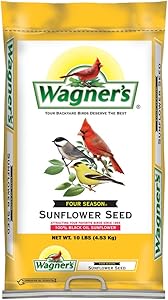
Wagner's 76025 Four Season Black Oil Sunflower Seed Wild Bird Food, 10-Pound Bag

 Wagner's 76025 Four Season Black Oil Sunflower Seed Wild Bird Food, 10-Pound Bag


  •  Attracts the widest variety of birds
  • Thin shelled sunflower - makes it easy for small beaked birds to open
  • This seed has the high energy content that all birds need to maintain their healthy lifestyle
  • Highest quality grains used
  • Made in the USA 

7 types of seeds for birds: characteristics and properties


Seeds are the most common food for birds, but you should know that they are not all the same, so it is very important to know how to choose them wisely. And is that each type of bird prefers a different type of seed. For example, while cardinals tend to like black-shelled sunflower seeds better, finches prefer shelled and thistles. And birds that feed on the ground, such as pigeons, sparrows, scratchers, and reeds like millet seeds best. Next, we explain which are the most common bird seeds and what properties each of them have.


1. Canary seed seeds

Canary grass is an oval seed, bright yellow in color and with a pointed shape . They are usually consumed by the same species of bird that include millet in their usual diet, which in addition to serving as food, serves as entertainment . They have a high starch content and have very little fat, so it is advisable to mix them with others that have a higher proportion of fat.

2. Millet seeds

Millet is a rounded seed that is essential in the diet of inseparable birds and parakeets . In contrast, large parrots tend to despise and ignore this type of bird seed, with the exception of the Eclectus. In the case of the birds that are raising, the best choice is the panizo, since being softer, it can be digested more easily by the chicks.

3. Sunflower seeds

It is a white seed with black stripes, oval in shape and flattened in appearance . We can find them white, listed and black. The preferred ones by the parrots are the white ones, but the granivores prefer the small striped ones. Although most birds like them very much, they should never be the only food in the diet . Also, salty foods should never be provided for human consumption, but purchased from a specialized bird food store . Remember to always choose large ones, since there are many birds that do not even make the effort to open the small ones, which means that a large part of the amount we buy will not be used by our birds.

4. Hemp seeds

The best hemp seed is the greyish-bronze one with a slight hint of green . The grain is white and has a flavor very similar to that of walnuts. A very strong seed that can be crushed to make it easier for birds to eat them. In small quantities it is one of the most valuable foods for canaries , since they are rich in oils and vitamin E. In addition, it greatly improves the condition for their reproduction. With which, if you want to breed, it is advisable to supply a teaspoon for each one a day.

5. Flax seeds

Flax seeds are dark in color and flat in shape . Very good for brightening plumage . In fact, during the molt, it is necessary to increase the ration. In addition, in small doses it helps to improve digestion.

6. Poppy seeds

Red poppy produces very small blue-gray kidney-shaped birdseeds. But the white ones give rise to a cream-colored seed that is preferred by most birds, especially by small granivores. However, it is necessary to avoid supplying it in excess, since it favors the retention of liquids and makes the stools are much more liquid.

7. Oat seeds

The oat seed is yellow in color and can be found in whole or broken seed bags, and can be supplied to our birds dry or soaked . An ideal food for canaries that are breeding, since oats are an easy to digest seed that can be easily disposed of. In addition, they help to stimulate the metabolism.


Food to attract birds to the garden or balcony


We have already spoken on several occasions about the importance of biodiversity in the garden on other occasions, in the case of birds, it is easy to turn a simple garden or balcony into a cozy space for them, making life easier for them in urban environments and incidentally benefiting from its presence for the control of pests of our ornamental plants and crops. If you want to discover the benefits of attracting birds to your garden, check this post.

The subject of food is essential to accustom the birds to visit our garden, to help the birds survive in periods of unfavorable weather and are in good reproductive conditions in spring- Here are some ideas of simple meals according to the birds that we want Attract:

Fresh or dried fruit

The fruit is highly prized by birds, especially among thrushes and blackcap. Pieces of apple or pears, even very ripe, strung on a wire and hanging from a branch will attract many birds. They will also appreciate half a coconut hanging upside down.
The most appropriate feeders for this type of food are those of the “click and hang” methodology, like the one shown below.

Seeds
It is very common to find seed mixtures to feed the birds, although it is important to control the quality. Some examples of seeds are:

  • Pipes: adored by parrots, excellent hunters of mosquitoes and other invertebrates, it is interesting to have them around.
  • Millet: The favorite of sparrows, accents, greenfinches, bunting and turtledoves
  • Corn: For blackbirds and accentors
  • Thistle seeds: their high oil content makes them quickly devoured.
  • The feeders for this type of food are shown in different formats. It is important to be able to hang it from branches where they are protected from predators (such as cats).

Bread
It is eaten by many species. Opting for the integral one is the best option, since we will also provide them with an extra seed.
Important: Moisten the bread before feeding it to the birds so that it does not swell in their stomachs.

Grated cheese
If you want to attract robins to the garden (which, by the way, usually accompany their snack with a second plate of flies and mosquitoes), the grated cheese does not fail. Robins like to eat on the ground, a small plate in a visible place and away from predators.

Tallow
The tallow cakes are a very nutritious and attractive food for birds, especially during autumn and winter, but a good supplement all year round. Chickadees and titmouses, woodpecker, nuthatch, warblers, redstart, etc. will approach.

You can buy them already made and make them yourself, here you have a simple recipe to make them.

Leftovers
Boiled eggs, cooked rice (the best wholegrain, but they won't turn down a good bowl of white rice either), stale cookie scraps, and salads.

What not to feed them
  • Very salty food: popcorn, for example.
  • Very spicy food

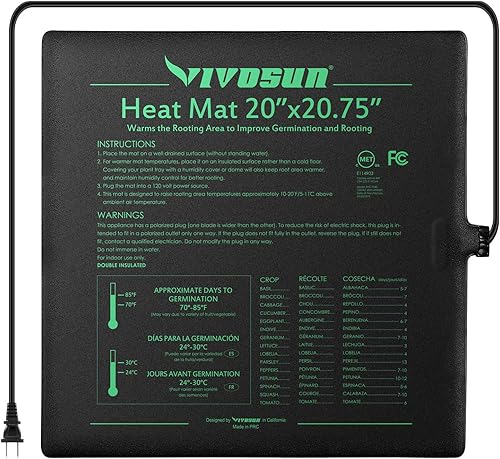
VIVOSUN Durable Waterproof Seedling Heat Mat Warm Hydroponic Heating Pad 20" x 20" MET Standard

 VIVOSUN Durable Waterproof Seedling Heat Mat Warm Hydroponic Heating Pad 20" x 20" MET Standard

  •  RELIABLE RESULTS: VIVOSUN’s professional heat mat maintains temperatures in the sweet spot of around 20-30℃(68-86℉)- perfect for seed starting and cutting propagation
  • STABLE, UNIFORM HEAT: VIVOSUN's strengthened heating film ensure this durable mat never scorches your roots and produces lots of revitalizing dew when used with a humidity dome
  • BUILT TO LAST: Supple, flexible and ultra-durable, VIVOSUN goes beyond stringent MET standards, water-resistance that enables safe scrubbing and a 1-year warranty
  • BEST SAVINGS IN THE MARKET: This 20" x 20.75" mat is perfect for two standard 1020 trays and slightly larger than comparable mats on the market; it also runs on only 40 Watts to help you save on electricity
  • INNOVATIVE HEATING: With radiate far-infrared light wave, making the heat source softer, and proving the seeds with enough heat, it can be heated up to 40 ℃(104℉)at an ambient temperature of 20-25 ℃(68-77℉)in minutes; Recommended for use with VIVOSUN's thermostat


How to protect plants from the cold

In these months when temperatures drop extremely at night it is recommended that you know how to protect plants from the cold . And there are many trees and plants in your garden that can deteriorate or die from night frosts and the extreme cold of winter.

Clear and calm nights, where there are few or no clouds to reflect the heat on the ground and little or no wind to disperse the warmer parts of the air, are ideal for frost. Cold air then settles at the lowest point, while warm air rises and moves away from the ground.

The frost cause ice crystals to form in plant cells, damaging them severely. Ice makes water unavailable to plant tissues and disrupts the movement of fluids within the plant. Frost-damaged leaves appear soaked in water, wilted, and turn dark brown or black. Its tissues are not able to absorb water, and the plant dies due to desiccation.

The protection of plants and trees in cold weather requires some advance planning. Likewise, it is necessary to know in advance what type of trees and plants are best resistant to low temperatures. That way, it will be easier for you to keep your garden in good health.

Here's what to consider before choosing a plant if you live in a cold and frost-prone area.

Tips for choosing trees and plants in cold climates

  • Know the resistance of plant species
  • The first thing to assess before planting is that plants are classified according to the minimum temperatures that they normally tolerate. So-called " hardy plants " tolerate a certain amount of short-term freezing. While the " tender plants " die or are damaged by freezing temperatures.

Thus, we find that the best cold-resistant plants for a garden are broccoli, carrots, lettuce, cabbage, chives, radish, spinach, chard or leeks.

In contrast, young plants are more sensitive to frost. Among this class of plants we find avocados, tomatoes, peppers, aubergines, corn, bougainvilleas, fuchsias, begonias, geraniums or citrus trees. Also shrubs and trees that bloom in spring, such as cherry and azalea.

Choose the best location

There are a number of factors that can influence whether the life of a tree or plant is extended or not. Terrain elevation, surface reflectivity, soil properties, canopy cover, and proximity to other structures or plants can all affect the heat radiation your plants receive.

Avoid planting young species in open, exposed areas or in low places where cold air settles. These types of plants are best placed near a wall facing south or west, which absorbs heat during the day and radiates it at night. Fences, boulders, walls, bushes and other plants can also serve as a protection function for other nearby plantations.

The areas with depressions in the soil are very susceptible to freezing , avoid planting them. Cold air drains into these "pockets" and cannot get out. When this happens, plants located in depressed areas can suffer frost damage. Therefore, try not to sow seeds or plant new plants in these low places.

Tricks to protect plants from the cold

When the cold arrives, not only people need to protect ourselves. To ensure that your plants and trees survive low temperatures, it may be necessary to cover them just like we do ourselves.

1. Add mulch
A layer of mulch can help protect perennials and newly planted shrubs and trees when cold temperatures hit. As the soil freezes and melts, it can expose some surface roots of the soil, making them even more vulnerable. Mulch helps provide a layer of protection to the roots of the plant in these cases.

2. Cover trees and plants
If you have young trees or varieties that have a thin bark (including some fruit trees), wrap their trunks with cardboard, blankets, or cloth. Otherwise, as the crust expands when the temperature is warm and contracts when it cools, it is likely to break. You can also use plastic to cover trees and plants, but make sure it is black so that it reflects the sun's rays and does not have a greenhouse effect on the trunk.

If you are covering your plants before a hard frost, it is best to do it before dark. If you wait until darkness falls, most of the heat stored in the garden will have dissipated.

No matter what type of cover you use, make sure it extends to the ground on each side. Do not leave any openings so that the heat does not escape. Stakes are also recommended to prevent the protective material from coming into contact with the foliage. Put the protector over the plant, preventing it from sticking to the trunk. Thus the heat that radiates from the soil will reach the plant.

In the morning, after the frost has thawed, remove the covers. If you don't, the plant could break its dormancy and begin to actively grow again, making it even more susceptible to frost damage in the future.

3. Wet the floor
Water the soil thoroughly (except around succulents). Moist soil holds heat better than dry soil, protecting roots and warming the air near the ground. This prevents freezing of the roots of the plant. During the night, moist soil will release moisture into the air, which will raise the temperature and keep the plants warmer.

It is recommended that you keep the most delicate plants in pots, so that you can take them to a sheltered place when the temperatures drop.

4. Harden the seedlings
Before planting the seedlings, you can acclimate them outdoors by gradually exposing them to outside conditions. This process is known as hardening, and it can help you grow stronger plants that are more likely to withstand inclement weather.

The hardening process should begin about 14 days before transplantation. When the weather is mild and above 7 ° C, place the seedlings outside during the day in a warm, shady place that is protected from the wind. At night, take them back inside.

After two weeks, the seedlings will be stronger and more resistant plants and will be ready for transplanting.

What to do if my plants have frost damage?

Just because you see that your plants have been damaged by frost does not necessarily mean that you should take drastic measures. Many plants are surprisingly very hardy and will likely sprout again in spring.

So the best option is to wait until the temperatures begin to rise again (usually around March) and see if new leaves sprout.

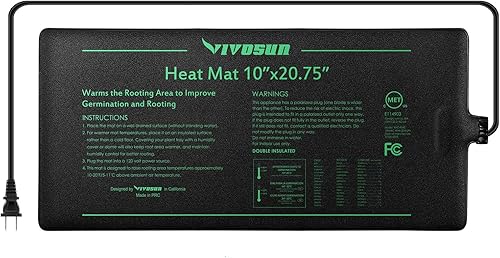
VIVOSUN Durable Waterproof Seedling Heat Mat Warm Hydroponic Heating Pad 10" x 20.75" MET Standard

 VIVOSUN Durable Waterproof Seedling Heat Mat Warm Hydroponic Heating Pad 10" x 20.75" MET Standard

  •  RELIABLE RESULTS: VIVOSUN’s professional heat mat maintains temperatures in the sweet spot of around 20-30℃(68-86℉)- perfect for seed starting and cutting propagation
  • STABLE, UNIFORM HEAT: VIVOSUN's strengthened heating film ensure this durable mat never scorches your roots and produces lots of revitalizing dew when used with a humidity dome
  • BUILT TO LAST: Supple, flexible and ultra-durable, VIVOSUN goes beyond stringent MET standards, water-resistance that enables safe scrubbing and a 1-year warranty;This product didn't specify any expiration date
  • BEST SAVINGS IN THE MARKET: This 10" x 20.75" mat is perfect for standard 1020 trays and slightly larger than comparable mats on the market; It also runs on only 18 Watts to help you save on electricity
  • INNOVATIVE HEATING: With radiate far-infrared light wave, making the heat source softer, and proving the seeds with enough heat, it can be heated up to 40 ℃(104℉)at an ambient temperature of 20-25 ℃(68-77℉)in minutes; Recommended for use with VIVOSUN's thermostat


How to help your indoor plants through the winter

During the winter the days get shorter, the temperatures drop and the houses are heated. All these conditions make life more difficult for indoor plants. A little care will help them get through this time.

The perfect location

Many plants use this low light season as a resting phase. They stop growth and reduce metabolism. Indoor plants prefer a slightly warm environment, while people generally like to have a very warm indoor temperature. For a large number of plants it is sufficient to place them further from the radiator. If you have plants in front of a window, make sure it doesn't get a cold breeze. Also keep in mind that the leaves do not touch the cold window, otherwise the plant will have a thermal shock and its leaves will turn brown and fall off. The root ball of the plant should not be located in a cold place, nor too hot. The most sensitive plants react with the loss of their leaves.

Proper maintenance

Indoor plants don't need as much water in winter. That is why you should check the soil moisture before watering them.

The air dries up due to the heating. This is uncomfortable for humans and plants. There are a few ways to make it more enjoyable. One way is to fill a plate with clay granules and water and put it under the pot. The water evaporates and moistens the air.

Another possibility is to spray the plant with warm softened water a couple of times a week. The spray mist prevents the plant from losing a large amount of moisture, covering the leaves. This also works against unwanted dust that reduces light. Therefore you should regularly clean the dust with a damp cloth. By doing this, photosynthesis will not be affected.

Especially in winter, small animals such as spider mites or mealybugs are comfortable in indoor plants. Pests multiply rapidly in hot, dry air. The best bet is to check the leaves and soil once a week. If the leaves have sticky spots, they indicate a pest infestation. In this case, you must separate the plant from the others, put them in the bathtub and give it a shower. Before starting the shower, put a plastic bag around the pot so that the plant does not absorb too much water. In case of not getting rid of pests, a suitable pesticide can be purchased. To avoid infestation by aphids pests you can place pieces of garlic in the pot. Make sure they are covered by soil so the garlic smell stays in the pot.

  • Here we have summarized the most important points
  • Do not water too much
  • Increase humidity
  • The plant should not be placed in too cold / hot soils
  • Avoid gusts of cold
  • Beware of pests
  • Make sure the plants have enough light


How to protect plants from the cold


If the weather is too cold or if your plants are too delicate, there are things you can do to help your garden get through the winter. It all depends on how delicate the plants are, how cold the climate is, how long the low temperatures will last, and how much energy and time you are willing to invest. No help will be enough to protect the growth of certain plants in certain climates, but in many cases a little extra care can help temporarily.

Protect Plants from the Cold Step 1


1
Bring potted plants indoors. The first and easiest solution to the cold is simply to protect the plants from low temperatures. If you have potted plants or hanging baskets outside, put them indoors. Even moving them to the garage or onto a verandah is beneficial as it carries a temperature rise of at least 10 Fahrenheit (5 degrees Celsius). If possible, the best solution is to place the plants inside the house as decoration. They will get the necessary heat without taking up additional space.

  • Place potted plants near windows according to their solar needs. Windows facing east and west receive the most light, while windows facing north and south receive the least.
  • Avoid placing potted plants near vents, as they can dry out and begin to die.
  • Placing plants too close to the window can be harmful if it's very cold outside. Freezing temperatures can travel from the window to the plant if they are in contact.

2
Lay out a layer of mulch . Mulch serves as an insulator, retaining heat and moisture from the soil. It is used to protect the root system of plants from cold temperatures. Sometimes the low temperatures are not what damages the plant, but the freeze-thaw cycle that affects the soil and causes it to "reject" the plant. Likewise, cold soil can prevent water from spreading easily from the plant. Regardless of the reason, applying a layer of mulch that is 2 to 3 inches (5 to 8 cm) thick will prevent these problems.

  • Mulch made from wheat or pine straw works well, being easy to remove when the soil is ready to be rediscovered. Also, it traps heat well.
  • Some plants, like roses and strawberries, can get through the winter by covering them completely with clean mulch.
  • Isolation works in both directions. It prevents the floor from cooling down too quickly, but it also prevents it from heating up early when the time comes. It is advisable to move it away from the plant when spring begins to warm. [one]

3
Cover the plants. Put an old sheet, blanket, or canopy over delicate plants. If the plants need to be protected from a few especially cold nights, a simple shelter like an old sheet may suffice. Choose the cover and spread it carefully so that it does not touch the leaves or branches of the plant. You may need to put in some stakes to support it if you don't want it to damage the plants. This method works best for frost protection rather than low temperatures, as the cover will not raise the temperature much.

  • Remove it during the day so that the plants get air and light.
  • You may need to put weight on it or tie the blanket so it doesn't fly off.

4
Build a nursery or greenhouse. Build a simple temporary nursery by bending metal poles into arches and embedding the ends in the soil along the rows of the garden. Then, place a clear plastic sheet over the arches to enclose the plant. This serves to trap heat and block frost and is the best solution to keep plants safe and warm during the winter. The bad news is that it requires construction work and is not the most visually pleasing solution.

  • Build a somewhat more permanent nursery by placing a hinged window or shutter on the open side of a box made of scraps of wood.
  • Build a greenhouse out of PVC arches.
  • Make sure the plants in the greenhouse or nursery receive adequate ventilation. Think how hot the interior of the car gets on a sunny day. If the temperatures are hot during the day, open the shelter to let the air circulate. Failure to do so can cause the plants to overheat or create too much humidity indoors.

5
Water the plants. Water the soil around the plants liberally before a very cold night or frost. Soil traps heat better when wet rather than dry, and water slowly evaporates, warming the air around the plants. Don't do this if you expect a severe frost, as it could backfire. However, to protect against light frost, abundant watering can help retain the heat of the day at night.

  • Do not water frozen soil, as it will not be helpful and can actually make conditions for the plants worse.
  • Don't over-water the soil around succulents, as they don't tolerate humidity levels. [2]

6
Provides a source of heat. If there is an episode of extreme cold that the plants will not survive, you can help them by providing a source of heat. Cover them with a plastic canopy, blanket, or homemade greenhouse (as described above) and place the heat source inside. Some possible sources of heat are Christmas lights or a 100 watt light bulb, as they are not hot enough to damage plants, but they are hot enough to increase the temperature. Do not place the heat source in direct contact with the plants, but rather far away, so that it increases the temperature without burning the plants.

  • Use extension cords and safe outdoor materials to avoid a dangerous situation.
  • Uncover the plants and turn off the heat source during the day to allow them to ventilate. Also, this prevents a fire from starting from an overheated bulb. [3]

7
Choose plants suitable for the climate. It is the simplest and least demanding option. Find out the hardiness zone in which you live, if your country has that classification system, or at least the lowest and highest temperatures possible during the year to get plants that resist them. In the United States, this classification system is run by the USDA. Some plants may dry out, lose their leaves, or become dormant in winter, so take the time to learn which plants are well adapted to the climate. The disadvantage of this method is that the selection of plants is obviously limited.

  • Annual plants dry out every year and must be replanted if not self-seeded. In cold climates, some perennials can be grown as annuals if there is no other way for them to survive the winter. The growing season for some annuals can be extended with shelters or by planting them indoors or in a greenhouse.
  • Perennials continue to grow year after year. In the case of these, you should find out the additional care required for them to survive the winter, if there is any.
  • Talk to people at your favorite nursery about what to expect of a plant during winter in the area. Also ask where to plant and how to care for a plant before buying it.
  • Look for varieties and types of plants suitable for the climate. There are more robust cultivated varieties than others, which makes them a better option for cold environments. [4]


Tips
  • Find out about the plants you have to find out how cold they tolerate, how they behave in it and what is the best way to help them get through the winter or protect them from frost. Some plants tolerate being covered, transplanted, or digged better than others.
  • If a plant has been indoors for a long time or if you are planting a seedling indoors, bring them outside gradually, starting with an hour a day and increasing the time. This is called "hardening" and it helps the plant adapt to the outdoors and become resistant.

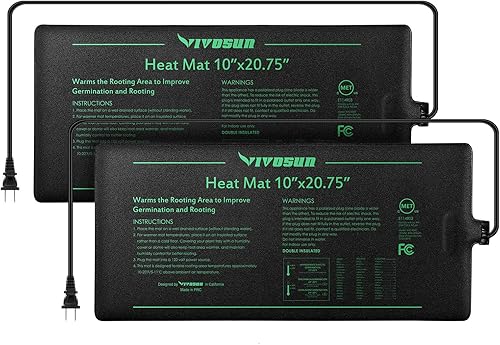
VIVOSUN 2 Pack Durable Waterproof Seedling Heat Mat Warm Hydroponic Heating Pad 10 x 20.75 Inch

 VIVOSUN 2 Pack Durable Waterproof Seedling Heat Mat Warm Hydroponic Heating Pad 10 x 20.75 Inch


  •  RELIABLE RESULTS: VIVOSUN's professional heat mat maintains temperatures in the sweet spot of around 10℉-20℉ above ambient air temperature - perfect for seed starting and cutting propagation!
  • BUILT TO LAST: Supple, flexible and ultra-durable, VIVOSUN goes beyond stringent MET standards, with a fortified connection between mat and power cord, water-resistance that enables safe scrubbing and a 1-year warranty.
  • STABLE, UNIFORM HEAT: VIVOSUN's strengthened Alloy Nikrothal heating wire and extra layer of insulating PET film ensure this durable mat never scorches your roots and produces lots of revitalizing dew when used with a humidity dome.
  • BEST SAVINGS IN THE MARKET: This 10" x 20.75" mat is perfect for standard 1020 trays and slightly larger than comparable mats on the market; it also runs on only 18 Watts to help you save on electricity.
  • CONVENIENT STORAGE: Delivered in a high-quality, reusable storage bag, the mat flattens out when heating up and can also be rolled back up for easy storage.
  • power source type: Air Powered


Tips for Your Indoor Plants During the Winter

Something that should be clear to us is that the winter season is rarely ideal for growing plants outdoors. Of course, unless you live in a warm and tropical area where the climate is fairly stable and the sun is hot practically all year round.

Luckily there are plants that can live and even thrive indoors. As long as we know how to protect them from the cold and give them the proper care, they will stay beautiful until the weather warms up again and we can return them to the balcony or terrace. Here are some useful tips.

Where to put them in winter

Whether they are plants that live inside your house all year round, or that you have brought them indoors to protect them from the winter cold, where you place them is of the utmost importance. Since you must not only protect them from inclement weather, but also choose a place where they can thrive for several months.

Find them a place away from the heating, since these devices tend to overheat the environment and reduce the little humidity that exists in the air in the interior spaces. Most ornamental plants are tropical species, so they prefer places with certain levels of humidity such as the kitchen or bathroom. 

Also be sure to place them away from open doors or windows, where very cold breezes are constantly blowing in. Ideally, keep them at a fairly constant temperature.

What kind of light do they need?

The ideal place to place them should have good light above all. Ideally, it should be filtered natural light coming through the windows. But if the days are too cloudy and dark, give them a little help with some artificial light.

Many plants can survive for some time in poor light, but you will surely notice a decline. This does not mean that they are dying, but that they have stopped the production of new leaves to rest and adapt to the new environmental conditions. Once the weather changes they will start to recover quickly.

When to water them

One of the most common mistakes when we take plants indoors is in the matter of watering. Indoor plants need to be watered very differently from those we keep outdoors, especially during the winter time.

A rule to follow is the following: the less sun and heat, the lower the risks. When we water our plants, they usually absorb only a portion of the water in the soil. The rest tends to evaporate with the light and heat provided by the sun, or passes into the deeper layers of the ground.

In the case of potted plants and indoors, the water tends to be kept in the ground longer, as it evaporates less easily. Then watering too much, the only thing that will do is create pools of water that will end up rotting the roots of your plants.

What about fertilizer

When the winter time comes the weather gets colder and the days shorter. Plants know this, so they take the opportunity to take a break in the production of branches, leaves and flowers. Therefore they do not need additional food, as the fabric factory will be closed for a while.

The ideal is to fertilize in the times of greatest sun, which go from spring to autumn. If you fertilize in times of cold and little sun, you will stimulate the plants to produce tissues without enough sun to develop. Then these can come out somewhat atrophied and even burn with the cold.

When to take them outside

Once the sun begins to warm up, the days get longer and you know that there will be no more frosts in the garden, it is time to take your plants out to the balcony or terrace. This usually happens in early to mid spring.

Remember that your plants have been indoors for a few months with little sunlight. So the ideal is to remove them gradually. That is, place them in a place with good but filtered light, not under direct sunlight.

Tuesday, February 9, 2021

Hoffman 10404 Organic Cactus and Succulent Soil Mix, 4 Quarts, Brown/A .1 Pack

 Hoffman 10404 Organic Cactus and Succulent Soil Mix, 4 Quarts, Brown/A .1 Pack

  •     Organic cactus and succulent soil mix
  •     Professionally formulated for use with both jungle and desert cacti
  •     Provides the drainage cacti need to flourish; ready to use; pH balanced
  •     Complete package directions provide useful growing information
  •     This product measures 4 quarts


How to choose the soil?


The soil is used by most gardeners, both as a substrate for potted plants and for growing in the ground. But what is it made of? Why use potting soil? And above all, how to choose? In fact, there is a wide range of potting soil at all price points and under a large number of different names, making it difficult to navigate at times. Here are some benchmarks to see more clearly and choose the best flooring for your intended use.

Definition of potting soil


Potting soil is a growing medium. It consists mainly of peat and composted plant debris (leaves ...). To improve the structure, topsoil and other organic materials (wood fibers, composted bark, manure ...) can be added. Other elements can come to complete it to give it specific qualities:

Fertilizer: provides nutrients that contribute to the good start of the plantations.
Mineral materials: they are designed to retain water (clay) or to lighten the soil and improve aeration (sand, perlite, vermiculite).

What is soil for?


For potted plantings , potting soil is often the only growing medium and is used as is. Aerated, it allows a good development of the root system, promotes a good anchorage of the plant, limits the suffocation of the soil and, therefore, the rotting of the root. Optimally transports water and nutrients to the plant. Finally, thanks to the various elements it contains or is enriched, it stimulates the growth of the plant.

For crops in the ground , in the garden, the supply of soil is at the level of the planting hole. The soil is used as is or mixed with the garden soil. Its use can serve two different purposes: to improve the nutritional qualities of the soil, which is depleted as crops grow, and / or to improve the soil. There is talk of an amendment when it comes to modifying the structure of the soil, such as improving the ability of a sandy soil to retain water and nutrients or, conversely, lightening a heavy clay soil.

What potting soil to choose according to its use?


The first criteria in choosing a potting soil is the use for which it is intended. Depending on whether you want to plant, seed, transplant, cut, or repot, you will not use the same soil. Also, for some types of plants, a specific soil is needed.

Terreaux for plantation


Universal Soil - In theory, universal potting soil should be suitable for all kinds of uses except plants with special needs. It can be a good option if you are looking to modify the soil in your garden.
  • Horticultural soil : it is a soil rich in humus and organic matter (manure, algae ...). Contrary to what its name suggests, it is a very versatile soil, suitable not only for planting flowers and flowering shrubs, but also in the vegetable garden and garden. It is suitable for both pots and field crops, but not for plants with special needs.
  • Vegetable soil : it is a soil enriched in organic manure and manure. It is generally used in organic farming.
  • Terreau pots and planters: is a potting soil designed to have strong water retention and to limit watering.
  • Green Soil Plants: It is an aerated soil that promotes rooting of plants to allow them a harmonious growth.

Some plants have special needs, which absolutely require the use of suitable soil: they are heather or acidophilic plants (azaleas, rhododendrons, hydrangeas, camellias ...), cacti and succulents. Orchids and citrus.

  • Heather earth : it is an acid soil, which can be composed of pure earth (true heather earth), or simply a mixture of various elements (peat, pine bark ...) making the potting soil acidic.
Cacti terrines and succulents: sand and pozzolana are part of its composition, for a very light and draining potting soil.

Soil orchids: it is also a very airy soil, rich in bark and pozzolana or perlite.

  • Citrus soil: it is a soil rich in clay, which retains enough water while being light and flexible. Enriched with nutrients more specifically for citrus, it promotes their growth and fruiting.
Soil Roses, Geranium Potting Soil - Roses and geraniums don't really need specific potting soil. Rose potting soil or potting soil geraniums are good organic materials enriched in vegetables. You can use a rose potting soil for all the flowers in your garden and a geranium potting soil for all of your flower boxes.


Soil for seedlings, cuttings and pots.


The soil for sowing and cuttings is a healthy soil, particularly fine and light, which favors the success of planting and cuttings. It can be used for both types of operations, even if it is not expressly mentioned in the name "cuts". This potting soil can also be used to transplant flower or vegetable seedlings after planting.
The soil pot is a pot soil adapted to pot all potted plants, green or flower, except those with specific needs.


How to recognize a potting soil?


Good quality potting soil is dark in color. It must be flexible to the touch and homogeneous. Large badly decomposed elements are, on the contrary, the mark of a mediocre soil. Finally it must be easily wet and retain water.
  • For the rest, read the labels! Depending on the type of compost you are looking for, some mentions are quality compromises: presence of manure, organic fertilizer, rooting stimulator ... On the contrary, unless they are specific uses, a soil very rich in bark and wood fiber. less interesting because it is grosser and less decomposed.
  • The mention "usable in organic agriculture" is an advantage, guaranteeing the absence of any chemical product in the soil.
  • In general, avoid very cheap land. They can simply serve to improve the structure of your soil, especially if you already regularly compost it.

Good soil, often the only substrate for potted plants, is the guarantee of good rooting while promoting optimal water and nutrient intake to the roots. It is worth choosing carefully, always in accordance with the intended use!

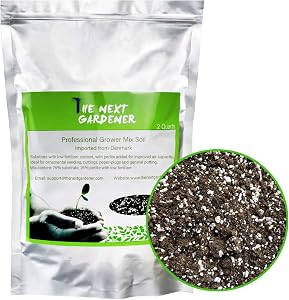
Professional Grower Mix Soil Fast Draining Pre-Mixed Coarse Blend (2 Quarts)

Professional Grower Mix Soil Fast Draining Pre-Mixed Coarse Blend (2 Quarts)


  •  Professionally formulated, imported from Denmark, to provide optimum growth for bonsai succulent and cacti plant and other indoor houseplants
  • Organic cactus and succulent soil mix, light-weight, well draining, pH balance (5.5). Our soil provides the plant support, moisture and drainage bonsai trees need
  • Perfectly for most succulent and cacti varieties, crassula ovata jade, donkey’s tail and other bonsai species. 100% organic and all natural bonsai soil
  • Well draining The Next Gardener succulent potting soil helps prevent root rot and overwatering
  • This soil is optimized for pH of 5.5. Neutral pH soil mix is perfect for succulents, cactus, bonsai and other acid-loving plants


Prepare and fertilize the garden


The vast majority of garden plants need a fertile soil , since it is their primary source of nutrients, and at the same time and with a good capacity to retain water and drain properly at the same time.

Prepare the ground and fertilize the soil in your garden

Land preparation is essential for your ornamental plants to develop well, especially if it is in the ground, but also if you use substrates in bags ready to use in pots and planters. The addition of organic fertilizer during the preparation of the flowerbeds and flowerbeds at the beginning of spring or autumn for sowing or planting, will restore the fertility and physical qualities that it has lost with your previous plantings and will make it available to the new ones. You plant the food and conditions they need to grow healthy and strong. This way they can provide you with an abundant and beautiful flowering.


STEP 1 How to prepare the garden soil

Step 1.1: Remove weeds and clean the land

Remove the pine bark or aggregates that you used to mulch the soil with the previous crop. Eliminate the remains of annual and biannual plants that have already completed their cycle, and the perennials (or perennial herbaceous) that you have decided to discard, as well as any weeds that have emerged.

Weeds appear all year round. Remove them periodically, you can help yourself with a rake to remove the remains of vegetation and roots.

Step 1.2: Prepare the soil for planting

Till the ground to a depth of 20 centimeters if you are going to sow. If you are going to plant developed specimens, take into account the height of the root ball to deepen what is necessary. Use a hoe or shovel. If the extension is large, you should use a motor hoe. Try not to affect the root zone of the plants that will remain in place (perennials, shrubs). You must turn the soil and break up the clods to get a soft and loose substrate where the roots of the plants can expand easily.

Step 1.3: Make a background fertilizer

Intermix the soil with organic matter (mulch, compost, worm castings, composted horse manure), you will recover the nutrients that have been lost with the previous crops and the new plants will have the necessary food to develop. You will also improve the structure and texture of the soil, fluffing those of the clay type, which tend to compact, and agglutinating the sandy ones. This is what is called a background subscriber.

Use substrates in ready-to-use bags, containing compost for the first weeks. This will save you the work of preparing the ground.

Step 1.4:  Prepare the soil for the next planting

Smooth the surface with a rake to make it even. Wait at least 15 days before sowing or planting.

If your garden bed is large, we recommend using a motor hoe to till it. It will be easier and you will save time. These handy tools can be electric or gasoline-powered.

STEP 2 Planters and pots

The different types of containers for growing ornamental plants in a patio or terrace - pots, planters, drawers, with and without a water reserve - are easily filled with substrates in bags.

Step 2.1: Provide nutrients to the soil

Place a layer of gravel at the bottom of the container to ensure good drainage and avoid puddling at the root level. Fill it with universal or special substrate for the type of plants you want to plant, ensuring that it is loose and without lumps. These specific substrates already include compost, so you won't need to add mulch. Leave two fingers between the surface of the substrate and the edge of the mount.

If you have already cultivated before in the substrate present in the container, it is not necessary to renew it completely. Remove the remains of the previous crops and remove the soil with a hoe until it is very loose and soft. Spread a light layer of compost and weave it around. You can also add new substrate.

Step 2.2: Work the soil before planting
Smooth the surface with the rake. You can sow the seeds or plant the specimens immediately. Once the plants are in place, add substrate around it and tamp it down with your fingers.

Step 2.3: Water generously
So that the seeds or plants settle well in the substrate and any remaining air pockets disappear. In the case of plants, this step is important so that the substrate is well adhered to the root ball.

Planters, especially those made of autoclaved wood, can function as small grow boxes, ideal for placing in a corner. They usually carry a geotextile bag inside to contain the soil and preserve the wood, or spacers to isolate crops.

STEP 3 A substrate for each type of plants

The different types of containers for growing ornamental plants in a patio or terrace - pots, planters, drawers, with and without a water reserve - are easily filled with substrates in bags.

Choose the right substrate


At LEROY MERLIN you will find universal or specific substrate bags for different types of crops, ready to use. They are quality products, 100% organic, free of seeds, weeds and heavy metals, and with the ideal degree of porosity for growing, so it is always kept fresh, that is, neither too wet nor dry.

- Universal substrates: you can use them for all types of plantations. There is also a universal substrate with hydrogels, which allow optimizing irrigation water, and light ones, weighing 50% less than usual, thanks to the presence of peat in their composition.

- Specific substrates: there are substrates specially formulated for:

  • Flowering plants and geraniums
  • Hydrangeas and azaleas (acidophilic)
  • Cactus and succulents
  • Green and indoor plants
  • Orchids
  • Rosales
  • Transplants